
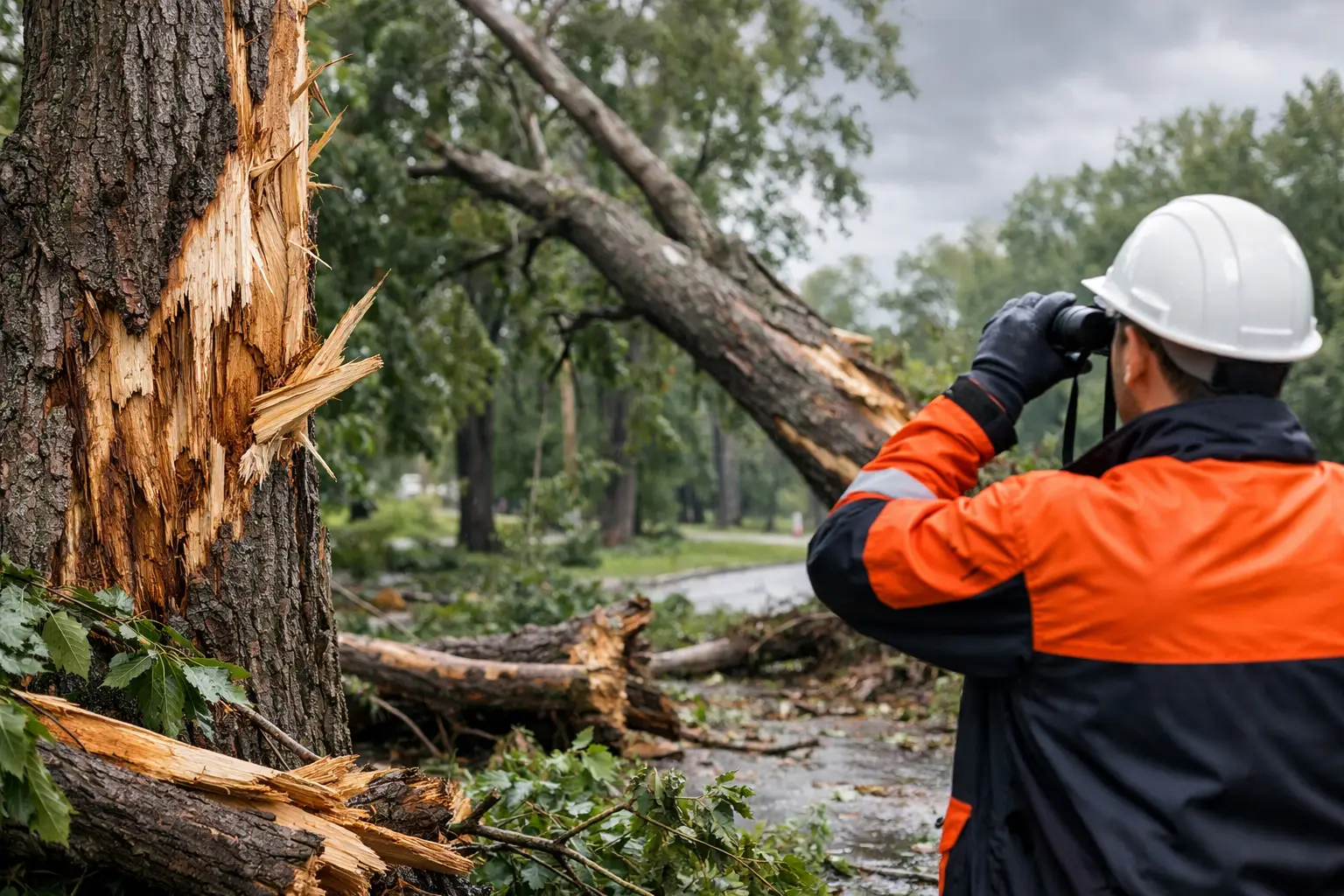
A tree risk assessment after storms starts before anyone reaches for a chainsaw. A limb can look settled after high wind or heavy rain while its connection to the trunk has already failed. A tree may remain standing but have loosened roots, cracked wood, or new lean that puts people, vehicles, roofs, fences, and utility lines at risk.
For Middle Tennessee property owners, the days after severe weather are the right time to slow down and look carefully. Storm damage is not always obvious from the driveway. Knowing what to watch for helps you protect the property while leaving dangerous work to a properly equipped tree crew.
Why storm-damaged trees need a closer look
Wind, saturated soil, lightning, ice, and falling limbs affect trees in different ways. A healthy-looking tree can lose structural strength when wind twists major limbs or when prolonged rain softens the soil around the root system. Mature trees near homes, driveways, parking areas, playgrounds, and commercial entrances deserve particular attention because the consequences of failure are greater.
The most urgent concerns are trees or limbs that could strike a target. That target may be a house, vehicle, power line, walking path, neighboring property, or a busy entrance. The condition of the tree matters, but so does where it is located and how often people use the area below it.
A professional assessment considers the full situation: the tree species, visible defects, root condition, canopy damage, lean, nearby structures, and safe access for removal or pruning. Some damage can be addressed with careful pruning. Other situations call for removal before the next storm turns a concern into an emergency.
7 warning signs to find during a tree risk assessment after storms
1. A new or worsening lean
A lean that appeared after the storm should be treated seriously, especially if the tree is leaning toward a building, road, or utility line. Look at the soil around the base from a safe distance. Raised soil, cracks in the ground, or exposed roots on one side can indicate that the root plate has shifted.
Not every leaning tree is an immediate hazard. Some trees naturally grow at an angle and have stable root systems. The concern is a change in position, particularly when wet ground and wind have worked together to loosen the roots.
2. Cracks in the trunk or major limbs
Long vertical cracks, fresh splits, or openings where two leaders meet can signal structural failure. Storm force often exposes weak branch unions that were not easy to see before. A cracked limb can remain in place temporarily, then fail later under its own weight or during another round of wind.
Do not stand under the limb to inspect it more closely. Take photos from a safe location if helpful, then keep people and vehicles out of the drop zone.
3. Hanging or partially broken branches
A broken branch caught in the canopy is often called a hanger. It may be small enough to manage from the ground only if it is completely clear of structures, lines, and people. Larger hangers are unpredictable. They can fall without warning, especially as the wood dries or wind returns.
This is one reason storm cleanup is not simply a matter of cutting what is on the ground. Removing suspended limbs requires proper equipment, controlled cutting methods, and a clear work zone.
4. Torn bark or fresh wounds at branch connections
When a limb tears away, it can pull strips of bark and wood from the trunk. These wounds may affect the tree’s ability to recover and can reveal deeper damage at the attachment point. A clean pruning cut on a smaller branch is very different from a large tear on a main leader.
The right response depends on the size and location of the damage. Over-pruning a stressed tree can create additional problems, but leaving a split or broken limb in place can be unsafe. An honest evaluation should distinguish between damage that can be pruned correctly and damage that has compromised the tree’s structure.
5. Root exposure, soil heaving, or fungal decay at the base
Roots do most of the work of anchoring a tree, and storm damage below ground is easy to miss. Watch for freshly exposed roots, lifted soil, a depression on one side of the trunk, or mushrooms and decay near the base. None of these signs alone gives a complete answer, but together they can point to reduced stability.
Trees growing in compacted soil, near recent construction, or on slopes may have root systems under stress before a storm arrives. After several days of rain, even a tree with a full green canopy may be less secure than it appears.
6. Deadwood that has become more visible
After a storm, dead branches often stand out because healthy leaves have been stripped away or smaller twigs have fallen. Deadwood over a roof, driveway, patio, parking lot, or shared HOA common area should be addressed before it becomes a falling hazard.
Routine pruning can reduce this type of risk, but storm-related work should focus first on branches that threaten people or property. A good plan does not remove healthy limbs without a reason. It prioritizes safety while protecting the long-term health and shape of the tree where possible.
7. Damage near power lines
Any tree, limb, or debris touching a power line is a utility hazard. Keep everyone away, including pets, and contact the utility provider if a line is damaged or down. Do not attempt to pull limbs free, use a ladder nearby, or drive equipment under compromised lines.
Even lines that appear intact may be energized. Professional tree crews also need the right clearance, training, and planning before work begins near electrical hazards.
What property owners can safely do first
After the storm has passed, walk the property only when conditions are safe. Wear sturdy shoes, stay alert for loose limbs, and avoid areas beneath damaged canopies. Check the roofline, driveways, walkways, fences, outdoor equipment, and access points used by family members, tenants, customers, or employees.
Photos can document visible changes for insurance purposes and help a tree professional understand what happened. Note whether the tree has moved, whether damage is new, and what lies within falling distance. If a tree has already struck a structure, contact your insurer and avoid moving material until you understand what documentation may be needed, unless emergency access or safety requires action.
For commercial properties and HOAs, temporary precautions matter. Restrict access to affected parking spaces, sidewalks, play areas, and entrances until hazardous limbs or unstable trees have been evaluated. A clear, early response can prevent a second incident after the weather has cleared.
When to call for professional help
Call promptly when a tree has a new lean, visible root movement, large split limbs, damage over a structure, or any involvement with utility lines. The same is true when a fallen tree blocks an entrance, driveway, private road, or essential part of a commercial site.
A qualified crew can evaluate access, determine whether pruning or removal is the safer option, and plan how to lower material without causing further damage. The job may require climbing, rigging, lifts, loaders, or specialized equipment depending on the tree’s size and location. Price should be clear, but the safest method is not always the cheapest or fastest-looking one.
Men in Green provides storm cleanup, hazardous tree removal, and pruning for property owners across Middle Tennessee. With more than 30 years of regional experience, the team can help identify immediate hazards and leave the work area cleaned up when the job is complete.
A storm may pass in an hour, but tree damage can remain a risk for days or weeks. Keep the area clear, document what you can from the ground, and get experienced eyes on anything that has changed. Acting early gives you more options and helps keep a damaged tree from becoming the next emergency.