
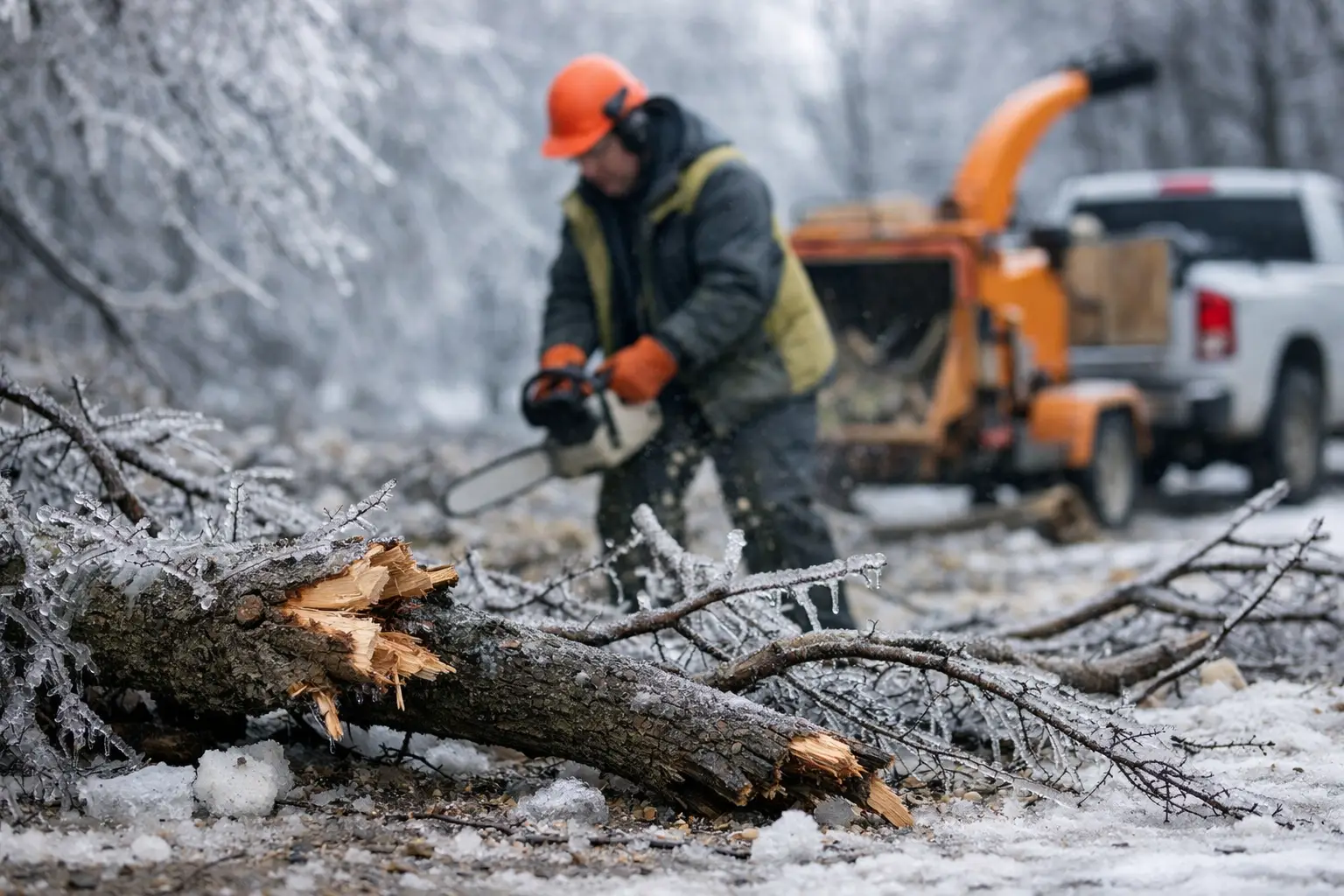
An ice-coated limb can fail without warning, even after the roads have cleared and the sun is out. That is why ice storm tree cleanup should begin with a careful look from a safe distance, not a chainsaw and a ladder. In Middle Tennessee, mature oaks, maples, pines, and ornamental trees can carry far more weight than they were built to handle when freezing rain accumulates.
The goal after an ice storm is not to make the yard look normal as quickly as possible. It is to protect people, structures, vehicles, and the healthy parts of the tree while removing hazards in the right order.
Ice Storm Tree Cleanup Starts With a Safety Check
Before walking under damaged trees, look up and look around. Broken branches may be caught in the canopy, resting on other limbs, or held in place by ice. A limb that appears stable can release as temperatures rise and the ice begins to melt.
Keep family members, pets, and visitors away from damaged trees. Mark off the area if possible, especially near driveways, sidewalks, play areas, and building entrances. Do not park beneath hanging limbs, even if the branch has not moved since the storm.
Power lines require a separate level of caution. If a tree or limb is touching a line, leaning into one, or has pulled a service line toward the ground, stay clear and contact the utility provider. Never try to move a branch off a line with a rake, rope, ladder, or equipment. Treat every line as energized.
A quick visual inspection can help you sort the damage. Look for split branch unions, cracked trunks, uprooted root balls, branches hanging over roofs, and limbs blocking access to a home or business. Take photos from the ground for documentation, but do not stand beneath the damaged area to get a better angle.
What You Can Handle and What Should Wait
Some storm debris is manageable for a property owner. Small twigs and branches already on the ground can usually be gathered once conditions are safe. Clear them from walkways, drains, and entrances so they do not create slip hazards or prevent water from moving away from the property.
The line changes when a branch is elevated, under tension, near a structure, or larger than what you can safely move by hand. Ice storms create unusual pressure points in wood. A fallen limb may be pinned beneath another branch, stretched against a fence, or loaded with tension that can cause it to snap back when cut.
Avoid climbing trees or using a ladder to reach broken limbs. Avoid cutting branches that are hanging, bent, or caught overhead. It is also wise to leave chainsaw work alone when the footing is icy, muddy, or uneven. A rushed cut can turn a cleanup job into an emergency.
If a branch has landed on a roof, do not assume it needs to be removed immediately by anyone available. The wrong removal method can cause more roof damage than the branch itself. A trained tree crew can assess the limb’s weight, the direction of pressure, and the safest way to lower it without making the situation worse.
How to Identify Tree Damage That May Get Worse
Not every damaged tree needs removal. Some can recover with proper pruning once the immediate hazard is addressed. The challenge is telling the difference between cosmetic damage and structural failure.
A few broken outer branches on an otherwise sound hardwood may be a pruning issue. A trunk with a fresh vertical split, a large limb torn from its connection point, or a tree that has shifted at the base is more serious. Trees with multiple heavy limbs broken on one side can become unbalanced, increasing the chance of later failure during wind or rain.
Evergreens deserve attention after freezing rain. Pine and cedar branches often bend dramatically under ice and may not rebound fully. Do not try to shake ice from branches or knock it off with poles. That can break brittle wood and place you directly under falling debris. In many cases, patience is the safest choice for lightly bent branches. Once the ice melts, an inspection can determine whether corrective pruning is needed.
Watch for signs at ground level as well. New cracks in the soil, exposed roots, a lifted root plate, or a noticeable lean can indicate that the tree’s anchoring system has been compromised. These conditions can be especially concerning near homes, parking areas, common spaces, and commercial entrances.
The Right Order for Storm Cleanup
Storm cleanup works best when hazards are handled before appearance. Start with access and safety: clear safe paths to doors, driveways, fire hydrants, utility equipment, and parking areas. Next, address branches that threaten buildings, vehicles, fences, or heavily used areas.
After urgent hazards are removed, the remaining work may include pruning torn limbs, removing failed trees, grinding stumps, hauling debris, and evaluating nearby trees that were weakened but did not fail during the storm. This is where a complete assessment saves time. A property may have one obvious fallen limb but several cracked branches still hanging over the same driveway.
For larger properties, HOAs, apartment communities, retail centers, and office sites, document the affected areas before crews begin. Note blocked entrances, damaged signage, tree debris near customer parking, and trees that affect pedestrian routes. A clear priority list helps restore safe access without overlooking a hazard on the far side of the property.
When Ice Storm Tree Cleanup Needs a Professional
Professional help is the right call when tree damage involves height, heavy wood, electrical hazards, structures, or unstable trees. It is also the better choice when a fallen tree has created a complicated situation involving fences, sheds, roofs, neighboring property, or limited access for equipment.
An experienced crew can remove damaged limbs in controlled sections rather than letting them fall unpredictably. Proper equipment matters, but so does judgment. Each cut changes the weight and movement of the remaining wood. That is why emergency tree work should be approached with a plan, not just muscle.
A professional assessment is also useful when the tree may be saved. Corrective pruning can remove torn, ragged branch ends and reduce future failure points. Over-pruning after a storm, however, can leave a healthy tree stressed and exposed. The best answer depends on the species, age, location, existing decay, and the extent of the damage.
For property owners in Smyrna, Murfreesboro, Nashville, Franklin, Brentwood, and nearby communities, storm response may be delayed when widespread ice affects roads and utility service. While waiting, keep the area secured, avoid disturbing damaged limbs, and take clear photos from a safe location. That information helps a tree professional understand the situation before arriving.
Do Not Forget the Cleanup Below the Canopy
A tree job is not finished when the large limb is down. Branches, wood chips, and scattered debris can block drainage, damage lawn equipment, and create trip hazards. Heavy limbs can also leave ruts or compacted areas in wet ground, particularly after a winter storm.
Ask how debris will be handled before work begins. Some property owners want wood left for firewood, while others need complete hauling and site cleanup. If a tree has to be removed, stump grinding may be worth considering, especially in a lawn, near a driveway, or where future landscaping or construction is planned.
Check surrounding shrubs, fences, gutters, and irrigation components after debris removal. Damage is sometimes hidden beneath branches or snow. A careful final walk-through helps ensure the property is safe, usable, and ready for the next round of weather.
Ice damage can reveal weaknesses that were already present in a tree. A prompt, honest assessment after the storm can prevent a hanging limb or cracked trunk from becoming the next emergency. Men in Green provides safety-focused storm cleanup and tree care for Middle Tennessee properties, with the equipment and experience to handle the work carefully and leave the site clean.