A tree can look stable from the ground and still be one strong gust away from failing. After a Middle Tennessee thunderstorm, ice event, or high-wind night, the priority is not restoring the yard quickly. It is keeping people away from a dangerous tree and preventing additional damage. This guide to emergency tree work explains what requires immediate action, what can wait for a scheduled removal, and how to make good decisions while help is on the way.
What Counts as an Emergency Tree Problem?
Emergency tree work is needed when a tree or large limb creates an active, immediate hazard. That may mean a trunk has split, a tree has fallen onto a home, or a hanging limb is directly above a driveway, entrance, vehicle, play area, or occupied building. A tree leaning suddenly after a storm also deserves prompt professional assessment, especially if the soil around its base has lifted or cracked.
Not every storm-damaged branch is an emergency. A small limb on an open lawn can usually wait, even if it is unsightly. The difference comes down to risk: whether the tree could injure someone, damage a structure, block access, or involve a utility line before it can be addressed safely.
In Smyrna, Nashville, Franklin, Brentwood, and surrounding communities, mature trees often grow close to homes, fences, roadways, and overhead service lines. That proximity is what turns a broken limb into a time-sensitive problem.
The First Steps to Take After Tree Damage
Start by creating distance. Keep family members, pets, tenants, employees, and neighbors outside the fall zone. A damaged tree can shift without warning, particularly when wet soil, wind, or additional rain are involved. Do not stand beneath a limb that is caught in the canopy, leaning on another tree, or resting against a roof.
If a tree has contacted a power line, assume the entire tree and nearby ground may be energized. Stay well back, keep others away, and contact the utility provider or call 911 if there is an immediate danger. Never try to pull a branch away with a rope, a ladder, a pole saw, or equipment. Even lines that appear to be cable or phone lines should be treated carefully until they are identified.
If a tree has struck your home, take photographs from a safe distance for insurance documentation. Note the time of the storm, visible damage, and any openings where water may enter. If there is structural damage, a gas smell, sparking, or an unsafe interior area, leave the building and contact emergency services. Tree removal solves only one part of the problem when a structure has been compromised.
A Quick Risk Check From a Safe Distance
You do not need to diagnose the tree yourself. In fact, climbing, cutting, or pushing on a damaged tree can turn a manageable situation into a serious injury. You can, however, observe a few warning signs from the ground and give a tree crew useful information when you call.
Look for these conditions:
- A trunk that has split, cracked, or separated into multiple stems
- Freshly exposed roots, lifted soil, or a new lean toward a target
- Large broken limbs hanging above areas people use
- A tree resting on a roof, fence, vehicle, or another tree
- Any contact or close involvement with overhead lines
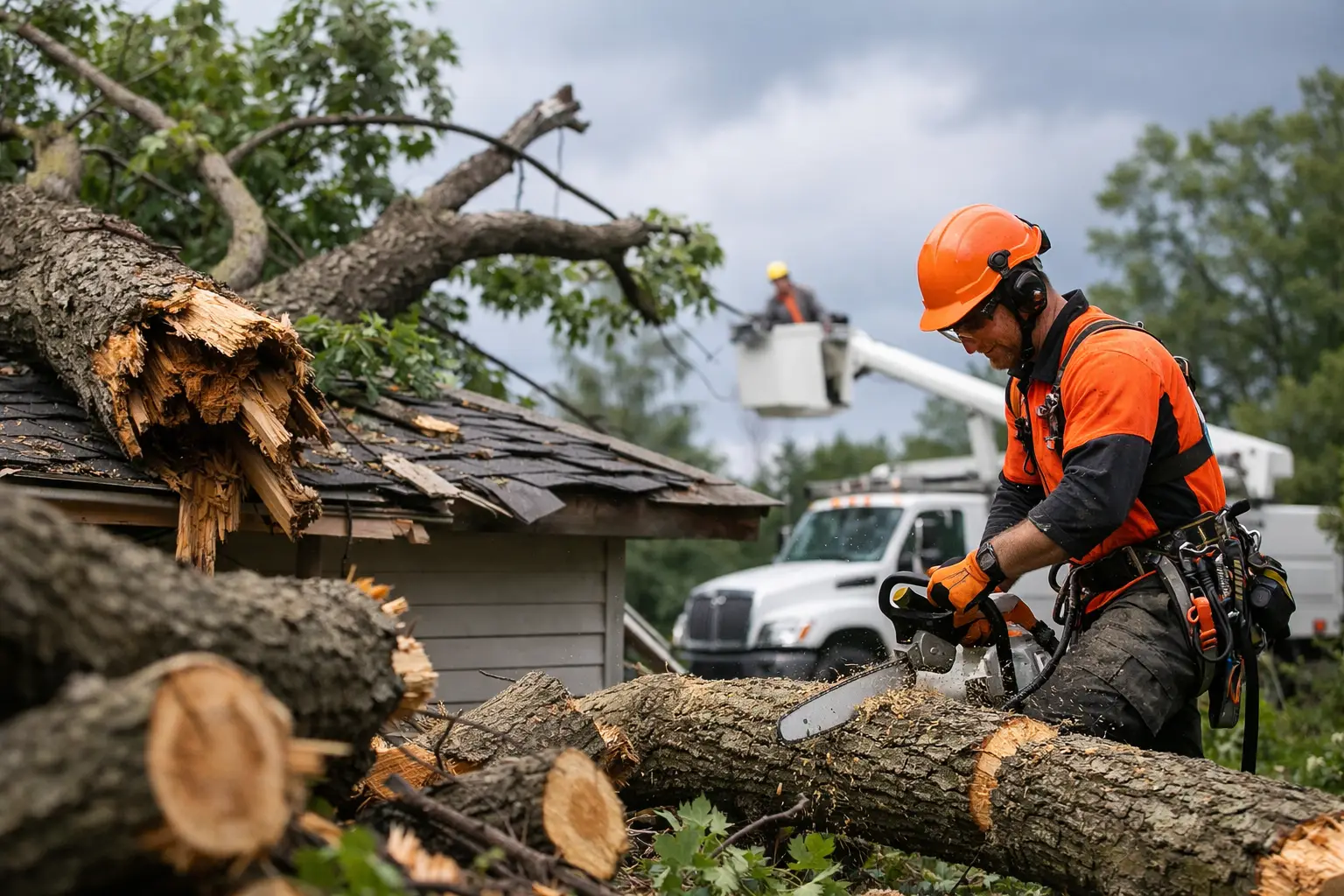
A tree that is still standing can be more difficult and more dangerous than one already on the ground. It may be carrying tension in its fibers, caught in adjacent branches, or balanced on unstable roots. Professional crews use the right equipment, controlled cutting methods, and a planned work zone to remove that risk without creating a second failure.
Why Emergency Tree Work Is Not a DIY Job
Homeowners often have chainsaws, ladders, tractors, and the desire to get the driveway open before work or school. Those tools have their place for small, clear debris on the ground. They are not enough for a compromised tree, elevated limb, or tree near a house or power line.
Storm-damaged wood behaves differently from healthy, supported wood. A limb can be under compression on one side and tension on the other. When cut in the wrong location or sequence, it can snap, roll, kick back, or drop in an unexpected direction. A ladder adds another hazard because the person cutting has limited escape options if the branch moves.
Professional emergency tree work is planned around the tree’s condition, access, targets below, equipment placement, and a safe drop zone. Sometimes the right approach is a crane or specialized rigging. Other times, a crew may remove smaller sections methodically, use a bucket truck where access allows, or stabilize the work area before beginning. The method depends on the tree, not just the size of the job.
What a Responsible Crew Should Assess
A qualified tree crew should begin with an honest assessment. The goal is to remove the immediate hazard while protecting your property as much as conditions allow. That includes looking beyond the obvious broken limb.
For example, a large limb may have torn bark down the trunk, leaving the rest of the tree structurally weakened. A tree that fell into another tree may have transferred weight and damage into the standing tree. A crew should identify these concerns and explain whether emergency removal, selective pruning, temporary risk reduction, or a follow-up visit is the sensible next step.
There are trade-offs. Removing a damaged limb may preserve a mature tree, but only if enough sound structure remains. Removing the whole tree may be the safer choice when there is extensive splitting, root failure, decay, or a poor lean toward a home. A good recommendation is based on the hazard in front of you, not a one-size-fits-all answer.
Ask how the crew will access the work area, protect turf and nearby structures, handle debris, and whether stump grinding is appropriate after removal. Clear expectations matter, especially during busy storm periods when scheduling and site conditions can change quickly.
Insurance, Documentation, and Cleanup
Insurance coverage varies by policy and by the cause of the loss. In many cases, insurance may help when a healthy tree falls because of wind, ice, or another covered event and damages a covered structure. It may not cover removing a tree that falls harmlessly in the yard. A tree that was visibly dead or neglected before the storm can also create questions about maintenance and liability.
Take clear photos and save invoices, but do not delay necessary safety work while waiting for an adjuster if the tree presents an active danger. Contact your insurer to understand your policy and ask what documentation they need. If a neighbor’s tree causes damage, avoid assumptions about responsibility. The details of the event, tree condition, and local circumstances matter.
Cleanup should also be part of the conversation. Emergency removal often leaves substantial brush, logs, sawdust, and access tracks. A professional job includes removing debris from the work area and leaving the site orderly. If a stump remains in a high-traffic area or is in the way of repairs, landscaping, or rebuilding, stump grinding and root removal can be planned after the immediate hazard is addressed.
Preparing Before the Next Storm
The best emergency response starts before the forecast turns bad. Routine pruning removes dead, weak, or poorly attached limbs before wind finds them. It also helps reduce excessive end weight in certain mature trees when done correctly. Topping a tree or making random cuts is not a solution and can lead to weak regrowth and future hazards.
For commercial properties, HOA communities, farms, and multifamily sites, regular tree inspections are especially useful around parking areas, sidewalks, entrances, playgrounds, and common spaces. Property managers should know who to call, where utility shutoffs are located, and which access routes emergency vehicles and tree equipment can use.
When a tree becomes unsafe, quick action should never mean rushed cutting. Keep people clear, treat power lines as a serious hazard, document what you can from a safe location, and bring in an experienced crew for the work. Men in Green provides safety-focused emergency tree removal and storm cleanup for property owners across Middle Tennessee, with the equipment and practical experience to handle difficult conditions and leave the site clean.