
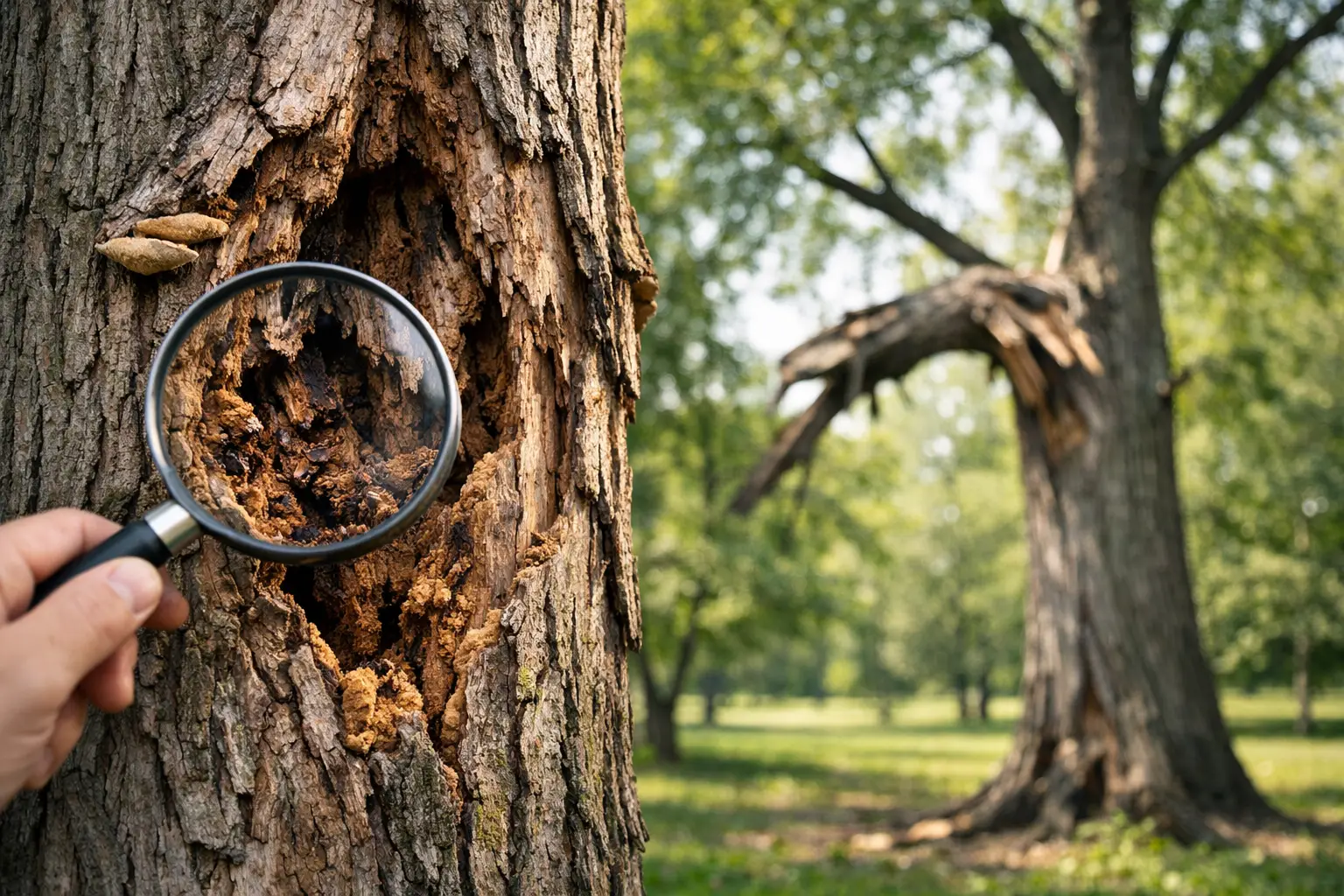
A mature oak can look strong from the driveway while decay is weakening it from the inside. That is what makes tree decay a property safety concern, especially when a tree stands near a home, driveway, fence, parking area, or power line. Knowing how to spot tree decay helps you address a problem before high winds, heavy rain, or a winter ice event turns it into an emergency.
Decay does not always mean a tree needs to be removed. Some trees can be pruned, monitored, or protected with proper care. The right decision depends on the tree species, the amount and location of decay, its overall health, and what the tree could hit if it fails.
Start With the Trunk and Root Flare
The lower trunk and the area where the trunk meets the ground offer some of the clearest warning signs. Walk around the entire tree when you can. A problem may be visible only on the side facing away from the house or hidden by vines, mulch, brush, or a nearby structure.
Look for cavities, open wounds, missing bark, and areas where the wood appears soft, crumbly, or darker than the surrounding trunk. A hollow area does not automatically mean the tree is unsafe. Trees can survive with internal hollows for years. But a large opening, especially one near the base of the trunk, can indicate a loss of structural strength that deserves a professional inspection.
Pay close attention to the root flare. This is the widened area at the base of a healthy tree where major roots begin. Raised soil, fresh cracks in the ground, exposed roots, mushrooms near the base, or a trunk that appears to be leaning more than it once did can point to root damage or decay. A new lean is more concerning than a long-standing lean, particularly after a storm or extended period of saturated soil.
How to Spot Tree Decay in Bark and Wood
Bark changes can reveal a problem before the canopy does. Healthy bark varies by species, but sudden bark loss, peeling sections, or long vertical cracks are worth a closer look. A crack that runs deep into the trunk, opens and closes, or has a visible seam may signal internal stress or a developing split.
Decay fungi are another common indicator. Shelf-like fungi growing from the trunk, conks at the base, or clusters of mushrooms around major roots may mean the tree is breaking down wood internally. Not every mushroom is proof of severe structural decay, since fungi can also feed on dead mulch or buried wood. Still, fungi growing directly from the trunk or root flare should not be ignored.
Some signs are easier to spot after rain. Water may collect in a cavity, seep from a crack, or expose punky wood that is soft enough to break apart by hand. Do not probe deep into a cavity or strike the trunk with tools. You may damage living tissue, and you cannot determine a tree’s safety based on sound alone.
Look Up for Canopy Changes
A tree with a full green canopy can still have a weak trunk, but the crown often provides useful clues. Dead branches, bare sections during the growing season, and leaves that are smaller or thinner than normal may indicate stress. Compare the tree with nearby trees of the same type if possible. One tree that leafs out much later or drops leaves far earlier than the rest may be struggling.
Deadwood is especially important when it hangs over areas people use. Large dead limbs can fall without warning, even on a calm day. Branches with peeling bark, no buds, no leaves, or brittle twigs should be inspected. If the dead branch is high in the canopy, near a roof, or over a driveway, do not attempt to remove it from a ladder.
Also watch for branches that cross, rub, or have deep included bark where two stems join. Included bark is bark trapped between stems instead of a strong wood connection. It can create a weak union that splits under wind, ice, or the added weight of wet leaves. Proper pruning can sometimes reduce the risk, but a large split or cracked union needs prompt attention.
Watch for Changes After Storms and Construction
Storms often expose conditions that were already present. A limb that tears out during a thunderstorm may reveal dark, decayed wood inside. New cracks, hanging limbs, a shifted root plate, or a tree that suddenly leans toward a target should be treated as urgent warning signs.
Middle Tennessee weather can be hard on mature trees. Strong spring storms, summer downpours, drought stress, and winter ice can all add force to weakened trunks and limbs. After severe weather, inspect trees from a safe distance before parking beneath them, using a patio, or allowing children and pets near the area.
Construction activity can also start a decline that becomes visible later. Grade changes, trenching, driveway work, compacted soil, and damage to major roots may reduce a tree’s stability or ability to take up water. If a tree begins thinning, develops dieback, or leans after work was done nearby, mention that history during an inspection. It helps identify whether root damage may be part of the problem.
Decay Is Not Always Obvious
The absence of visible symptoms does not guarantee a tree is sound. Internal decay can be hidden behind intact bark, while a tree with a rough-looking cavity may still have enough healthy wood to remain stable. This is why location matters as much as appearance.
A declining tree in the back corner of a large field may present a different level of risk than the same tree beside a nursery window or a commercial parking lot. Property managers, HOA boards, and homeowners should prioritize trees near pedestrian areas, buildings, utility lines, roads, play spaces, and frequently used parking areas.
Tree species and age also matter. Older trees naturally develop wounds and cavities over time, and some species compartmentalize decay better than others. A qualified tree professional considers the full picture rather than recommending removal based on one mushroom or a single dead limb.
When to Call for a Tree Inspection
Call for a professional assessment promptly if you see a new lean, cracked trunk, raised roots, a split major limb, large fungal growth on the trunk, or substantial deadwood over a target. Keep people, vehicles, and equipment out of the drop zone until the tree can be evaluated.
If a branch is tangled in a power line, do not approach it, cut it, or try to move it. Contact the utility provider first. Even a branch that appears to rest lightly on a line can be energized and dangerous.
For less immediate concerns, schedule an inspection before storm season or before starting a construction, landscaping, or land-clearing project. A trained crew can identify whether selective pruning, cabling in limited cases, removal, or ongoing monitoring makes the most sense. The goal is not to remove every imperfect tree. It is to reduce risk while preserving healthy trees that add value and shade to the property.
Do Not Rely on Quick Fixes
Filling a cavity with concrete, painting over a wound, or cutting off large limbs without a plan will not stop internal decay. In some cases, those actions create new damage or make future inspection harder. Topping a tree is another common mistake. Removing the top of a mature tree can lead to weak regrowth, larger wounds, and greater failure risk later.
A safer approach is to document what you see, take photos from the ground, and note when the change first appeared. That information is useful when a tree care professional evaluates the tree. It also helps property managers track conditions across larger sites.
If you are concerned about a tree near your home, business, or shared community space, Men in Green can provide an honest assessment and a clear estimate for the work that is needed. A careful inspection today can protect the people and property beneath the tree when the next storm arrives.