A mature tree can make a retail property feel established and welcoming. A hanging limb over a busy parking row, blocked storefront sign, or storm-damaged tree near a sidewalk can create the opposite result quickly. Retail center tree maintenance is not simply about keeping the grounds attractive. It is a practical part of protecting customers, tenants, vehicles, buildings, and the reputation of the property.
For retail property managers, the challenge is timing. Tree work must be completed safely, with as little disruption as possible to shoppers and businesses. A planned maintenance approach gives you more control than waiting for an emergency call after a limb falls or a tree becomes visibly hazardous.
Why Retail Center Tree Maintenance Deserves a Plan
Retail centers have more traffic patterns and potential hazards than most residential properties. Trees grow around sidewalks, drive lanes, loading areas, storefronts, monument signs, utility lines, outdoor dining spaces, and parking lots. What appears to be a minor issue from the ground can become a safety concern when customers are walking beneath it or parking beside it all day.
Deadwood, low limbs, weak branch unions, root damage, and storm stress can all affect a tree’s condition. In Middle Tennessee, heavy rain, high winds, ice, and saturated soil can expose problems that were not obvious during a dry, calm stretch of weather. A tree does not need to fall completely to cause trouble. One broken limb can damage a vehicle, block an entrance, crack a light fixture, or make a sidewalk unsafe.
A consistent service plan also helps prevent trees from slowly taking over functional parts of the property. Limbs can reduce visibility at entrances and exits, interfere with signs, scrape buildings, and block lighting. When these issues are handled early, the work is usually more straightforward and less disruptive than an urgent removal.
What a Practical Maintenance Plan Should Cover
The right plan depends on the age of the trees, site layout, tenant activity, and how much deferred work is already present. A newer shopping center with young ornamental trees needs different care than an older property with large oaks around the outer parking areas. Still, most retail center maintenance plans should address tree condition, clearance, appearance, and seasonal risk.
Routine inspections and hazard checks
A qualified crew should inspect trees for dead or broken limbs, cavities, cracking, fungal growth, leaning, root disturbance, and branches rubbing against structures. Inspections are especially valuable after significant storms, nearby construction, utility work, or changes to drainage around the property.
Not every defect means a tree must come down. Proper pruning may reduce the risk while preserving a healthy, established tree. In other cases, removal is the honest recommendation, particularly when decay, root failure, or structural weakness makes the tree unsafe near customer traffic. A good contractor explains what they see, what work is recommended, and why.
Clearance for traffic, signs, and lighting
Retail trees need clearance that supports daily operations. Limbs should not hang low over driving lanes, delivery routes, parking spaces, sidewalks, or accessible paths. They should also be kept back from roofs, awnings, exterior lighting, security cameras, and storefront signage.
Clearance pruning is not the same as cutting branches back aggressively. Over-pruning can stress a tree, encourage weak regrowth, and leave it looking bare. The goal is selective trimming that improves clearance and visibility while respecting the tree’s natural structure.
Pruning for tree health and appearance
Well-maintained trees frame a property instead of competing with it. Selective pruning removes dead, crossing, crowded, or poorly attached branches and improves airflow through the canopy. It can also help maintain a cleaner, more consistent appearance along entrances and storefronts.
Timing matters. Some species respond best to pruning during dormancy, while others may need attention after storm damage or when clearance becomes an immediate concern. The work schedule should follow both tree needs and the center’s operating hours. Early morning, lower-traffic periods, or phased work may make the most sense for an active retail site.
Removal of hazardous or declining trees
When a tree is beyond safe preservation, removal should be planned carefully. Retail properties often have limited drop zones, nearby vehicles, power lines, landscaping, and tenant operations to protect. Professional equipment and an experienced crew matter when a removal requires controlled rigging, sectional dismantling, or careful access through a busy site.
Tree removal should include a clear plan for traffic control, protection of nearby improvements, debris handling, and final cleanup. If the stump creates a tripping concern, blocks a landscaping upgrade, or interferes with future construction, stump grinding and root removal may be part of the scope as well.
Schedule Work Around Your Tenants and Customers
The best tree work is noticeable for its results, not for the disruption it causes. Before work begins, property managers should identify peak shopping periods, delivery windows, tenant events, outdoor seating areas, and access routes that cannot be blocked. This information helps the tree crew plan equipment placement and establish safe work zones.
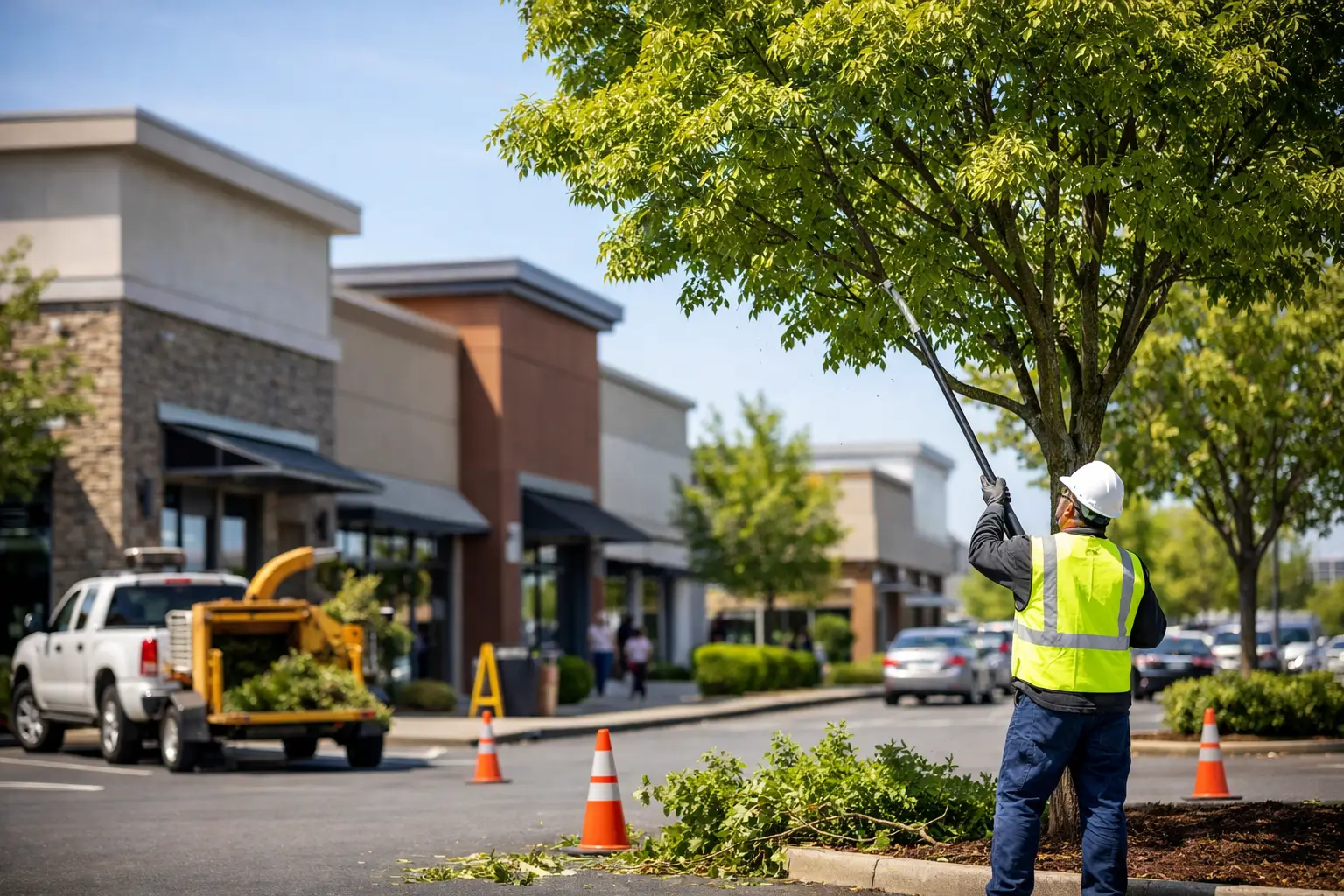
For larger pruning or removal projects, it may be best to work in sections of the parking lot rather than close broad areas at once. Cones, temporary barriers, and clear communication help direct vehicles away from the active work area. This protects the public while allowing the rest of the center to remain open.
Cleanup is equally important. Sawdust, brush, wood chips, and small debris should not be left where customers walk or park. A professional commercial crew leaves the site clean and ready for normal business activity. That standard matters to tenants who depend on a presentable property to serve their own customers.
Watch for These Warning Signs Between Service Visits
Property managers and maintenance staff do not need to diagnose every tree issue, but they should know when to call for an assessment. A quick walkthrough after a storm can catch issues before they create a larger problem.
Pay attention to these conditions:
- Dead limbs hanging over parking, sidewalks, or storefronts
- Fresh cracks, splits, or a sudden lean in a trunk or major branch
- Mushrooms or decay near the base of a tree
- Exposed, lifted, or damaged roots near pavement and curbs
- Branches contacting buildings, signs, lights, or utility lines
- Trees with thinning foliage, bare sections, or unusual leaf loss
These signs do not always mean immediate removal is necessary. They do mean the tree deserves a professional look, especially when it sits near a high-traffic area. Waiting until a limb fails can turn a manageable maintenance task into an emergency response.
Account for Storm Season Before It Arrives
Middle Tennessee weather can shift fast. Strong thunderstorms, wind events, and winter ice place extra strain on trees that already have deadwood or weak branch structure. Retail centers that prepare before storm season are better positioned to avoid blocked entrances, damaged vehicles, and rushed decisions after a weather event.
Pre-storm work should focus on known hazards, low-hanging branches, compromised trees, and limbs over high-use areas. It is also wise to review access for emergency equipment and make sure the property has a reliable contact for storm cleanup. After severe weather, prompt removal of fallen limbs and damaged trees helps restore safe access for tenants and customers.
Choose a Commercial Tree Crew That Understands the Site
Price matters, but the lowest quote may not account for the full job. For a retail property, ask whether the scope includes traffic protection, equipment access, removal methods, debris hauling, and final cleanup. Confirm that the crew is insured and prepared to work around active businesses, parked vehicles, and pedestrian areas.
Experience with commercial sites is valuable because the work requires more than cutting branches. The contractor needs to assess risk, coordinate around operations, use the right equipment, and communicate clearly when conditions change. Men in Green brings more than 30 years of regional experience to commercial tree maintenance across Middle Tennessee, with hands-on attention to safety, scheduling, and clean job sites.
Healthy, well-managed trees are an asset to a retail center. They provide shade, improve curb appeal, and help a property feel cared for. A regular inspection and maintenance schedule gives you the opportunity to keep those benefits while addressing risks before they affect the people and businesses that rely on your property every day.