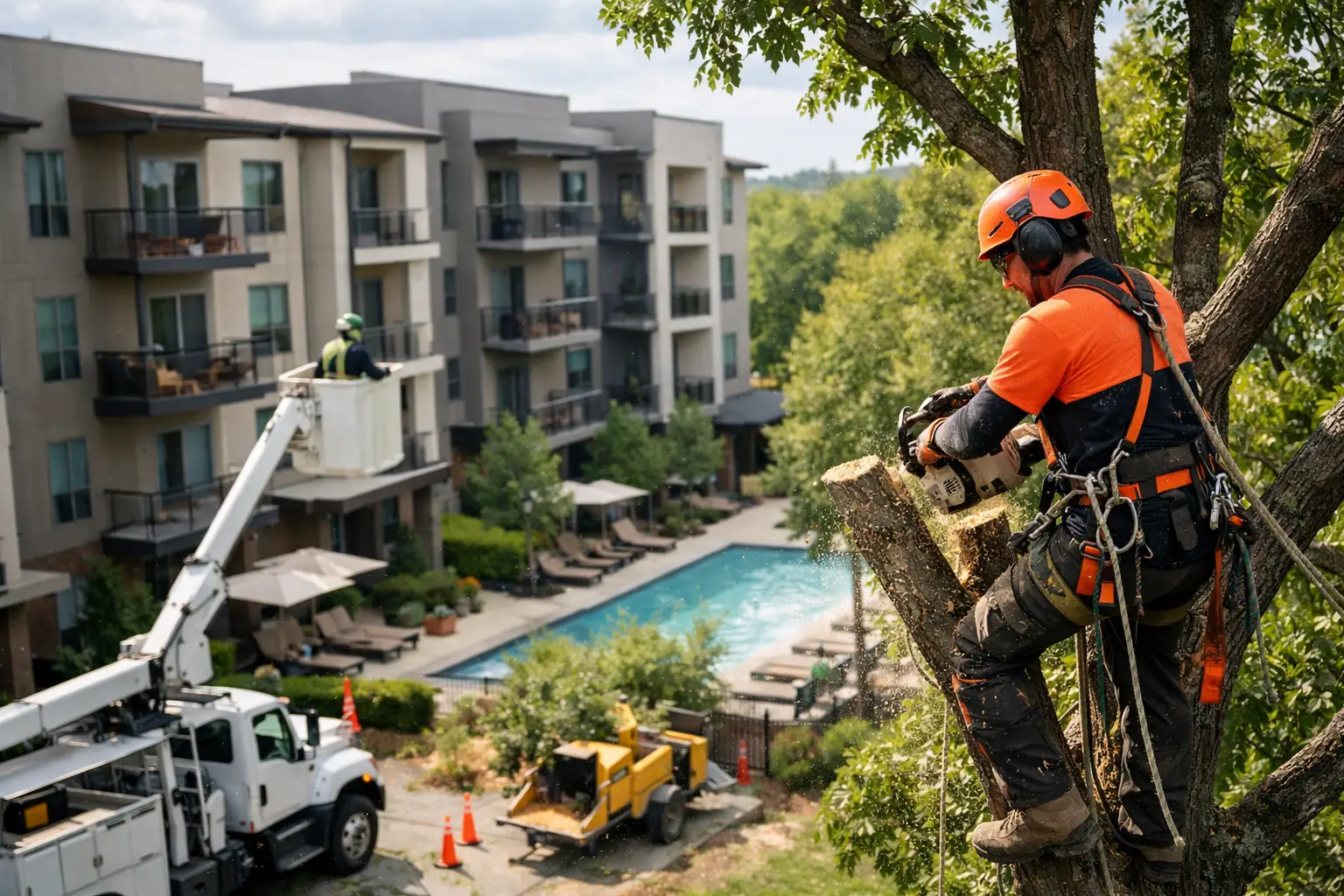
A leaning tree over resident parking is not a landscaping detail. It is a safety concern, a potential vehicle claim, and a problem that can disrupt an entire property when weather moves in. Professional apartment complex tree service helps managers address those risks before a limb falls, a root damages pavement, or a storm turns a manageable issue into an emergency.
For multifamily properties, tree work has to do more than make the grounds look better. It needs to protect residents, buildings, sidewalks, utility areas, parking lots, and the daily flow of the community. That calls for a plan built around clear communication, safe work practices, proper equipment, and a crew that leaves the property clean when the job is done.
What Apartment Complex Tree Service Should Cover
Apartment communities have different needs than a single home. A mature tree may shade a courtyard, hang over several parking spaces, sit beside a playground, or grow close to a building entrance. The right solution depends on the tree’s condition, location, species, and the people and property beneath it.
A complete service plan often includes routine trimming and pruning, hazardous tree removal, storm-damage cleanup, stump grinding, and ongoing maintenance. Land clearing and bush hogging may also be needed around undeveloped portions of the property, retention areas, fence lines, or future expansion sites.
Routine pruning is usually the least disruptive and most cost-effective option when a tree is healthy. Removing dead limbs, improving clearance over drives and sidewalks, and reducing branches that interfere with buildings can help preserve a valuable tree while reducing risk. Removal becomes the better choice when a tree is dead, severely damaged, declining, structurally unsound, or planted where its growth creates an ongoing hazard.
The goal should not be to remove every large tree. Mature trees add shade, curb appeal, and value to a community. But keeping a tree simply because it looks healthy from a distance can be a costly decision if there are visible cracks, decay, root problems, or heavy limbs over high-traffic areas.
Start With Risk, Not Appearance
Property managers often receive maintenance requests after residents notice a low limb or a tree that looks rough after a storm. Those reports matter, but the first step is a site assessment rather than a quick cosmetic cut.
Look closely at trees near building roofs, balconies, pool areas, mail kiosks, playgrounds, dumpsters, transformers, entrances, and resident parking. Dead branches in a tree canopy can fall without warning. A tree with a sudden lean, exposed roots, split trunk, hollow areas, mushroom growth at the base, or soil lifting around the root zone deserves prompt professional attention.
Storms can make hidden defects more obvious. High winds may crack a major limb without dropping it immediately, leaving it suspended above a drive or sidewalk. Heavy rain can soften soil around a compromised root system. In Middle Tennessee, ice and wind events also place extra weight and stress on limbs that were already weak.
Not every concern requires emergency removal. A qualified tree crew can explain whether pruning, cabling, monitoring, or removal makes practical sense. Honest assessments are especially valuable for apartment managers balancing safety, budgets, resident expectations, and long-term maintenance needs.
Prioritize the Highest-Exposure Areas
When several trees need attention, start where failure would have the greatest consequence. Trees over occupied buildings, walkways, parking areas, and community amenities generally move to the front of the list. Trees in remote natural areas may still need care, but their urgency can be different.
This prioritization also helps managers phase larger projects. A property does not always need to complete every improvement at once. Address immediate hazards first, then schedule routine pruning, stump work, or less urgent removals as part of a planned maintenance cycle.
Plan Work Around Residents and Operations
Tree work involves noise, equipment, falling debris, and temporary access restrictions. On an apartment property, the work plan should account for residents who need to park, receive deliveries, walk pets, or leave for work and school.
Before work begins, management should know which spaces, sidewalks, or entrances need to be closed and for how long. Resident notices should be specific: identify the affected area, the expected work date, parking instructions, and any temporary access changes. Vague notices create frustration and can leave vehicles in the wrong place when crews arrive.
A professional crew should establish a controlled work zone and protect nearby surfaces where possible. For removal near buildings or parked cars, that may mean taking a tree down in carefully managed sections rather than dropping large pieces. Equipment selection matters. The right machinery can improve safety and efficiency, but the crew must also consider gate widths, pavement, landscaping, underground utilities, and access around occupied buildings.
Timing depends on the property. Work near a clubhouse or leasing office may be easier on a lower-traffic day. Pruning around a pool, playground, or outdoor event space may need to happen before peak use. Emergency work is different, of course. When a limb is blocking access or threatening a structure, safety takes priority over convenience.
Do Not Forget Stumps and Roots
Tree removal is only part of the job. A leftover stump can become a trip hazard, interfere with mowing, attract pests, or make a landscape renovation harder. In common areas, near sidewalks, or where replanting is planned, stump grinding is often the practical next step.
Root removal is a separate consideration. Removing every root is not always necessary or advisable, particularly near utilities, pavement, or structures. The right approach depends on what will happen in that area next. If the space will be graded, repaired, planted, or used for construction, discuss the intended use during the estimate so the work can be scoped correctly.
Roots also deserve attention before a tree is removed. Surface roots lifting sidewalks, growing into curbs, or affecting drainage may point to a larger site-planning issue. Cutting roots without understanding the tree’s stability can create a hazard. Sometimes the safest answer is root management and pavement repair; other times, the tree itself must be removed.
Build Tree Care Into the Maintenance Calendar
Waiting for complaints or storms to identify tree problems puts a property on the defensive. A recurring inspection and maintenance plan gives managers a clearer picture of what needs attention and when.
For many communities, a seasonal walk-through is a practical starting point. Check trees before the strongest storm seasons, after major weather events, and before work that may affect roots or access, such as paving, utility installation, fence replacement, or new construction. Documenting concerns with photos and dates also helps managers track changes and communicate recommendations to owners or HOA boards.
A maintenance calendar should include more than trees. Overgrown fence lines, brush around retention areas, and unmanaged acreage can affect visibility, access, appearance, and fire risk. Bush hogging or selective clearing may be the right way to regain control of those spaces without treating the entire area like a finished landscape.
Choose a Contractor Who Understands Occupied Properties
Price matters, but the lowest estimate is not always the lowest-risk choice. Apartment managers should ask how the crew will control the work area, protect nearby property, handle debris, communicate schedule changes, and respond if weather interrupts the job. They should also confirm that the contractor has appropriate insurance and experience working around occupied buildings and active parking areas.
Clear estimates help prevent surprises. The scope should state whether it includes tree removal, hauling, brush disposal, stump grinding, cleanup, and any limitations caused by access, utilities, or site conditions. Cleanup is not an extra detail for multifamily properties. Residents and ownership teams expect the grounds to be usable and presentable when work is complete.
Men in Green brings more than 30 years of regional tree-care and land-management experience to commercial properties across Middle Tennessee. For apartment managers, that local experience matters when crews are working around mature trees, changing weather, tight access, and residents who need clear answers.
A well-managed tree program protects more than the property budget. It shows residents that management pays attention to the details that affect their daily safety and comfort. When a questionable tree is identified, a clear assessment and timely plan are far easier to manage than an avoidable emergency.