A large limb hanging over a driveway may look like a small concern until a summer thunderstorm rolls through Middle Tennessee. That is when the practical tree pruning benefits become clear: fewer hazards, stronger tree structure, healthier growth, and a property that is easier to maintain.
Pruning is not simply cutting branches to make a tree look neat. Done correctly, it is a planned service that considers the tree species, age, condition, location, and the structures or people beneath it. Done poorly, it can leave a tree stressed, unstable, or more vulnerable to insects and disease. For homeowners, HOA boards, and commercial property managers, professional pruning is one of the most effective ways to protect both trees and property.
Tree Pruning Benefits Start With Safety
The most immediate reason to prune is often safety. Dead, cracked, rubbing, or overextended limbs can fail without much warning, especially after heavy rain, wind, ice, or saturated soil. A branch does not have to be enormous to cause damage. Smaller limbs can break windows, block walkways, damage vehicles, or create hazards near entrances and parking areas.
Pruning removes identifiable risks before weather turns them into an emergency. A trained crew looks beyond what is visible from the ground, checking for deadwood high in the canopy, weak branch unions, limbs growing toward roofs, and branches interfering with service lines. This matters on residential lots, but it is especially important for apartments, retail centers, offices, and HOA common areas where more people move through the property every day.
Not every heavy-looking limb needs to come down. Some can be selectively reduced to lessen the load and improve clearance while keeping the tree’s natural shape. That distinction matters. Removing too much at once can create a different set of problems, including sunscald, weak regrowth, and unnecessary stress.
Healthier Trees Need the Right Cuts
A healthy tree can naturally shed small branches, but it cannot always correct structural problems or recover well from crowded growth. Proper pruning removes dead or declining limbs that may attract decay organisms and helps improve air movement and light through the canopy. This can be helpful in dense, humid conditions where foliage stays wet longer after rain.
Selective thinning can also keep branches from rubbing against one another. When limbs rub, the bark is damaged, creating an entry point for pests and disease. On young trees, corrective pruning can establish a stronger central structure early, reducing the chance that major limbs compete or split apart later.
The goal is not to thin every tree aggressively. A mature oak, maple, cedar, or ornamental tree each responds differently, and the amount removed should match the tree’s condition. A tree already stressed by drought, construction damage, compacted soil, or disease may need a more conservative approach. Good pruning supports the tree’s biology instead of forcing it into an unnatural shape.
Why Topping Is Not Pruning
Topping means cutting large branches back to blunt stubs or severely reducing the height of a tree. It may seem like a quick solution for an overgrown canopy, but it usually creates weak, fast-growing shoots and large wounds that do not close well. The tree can become less stable, not more.
If a tree has outgrown its location, crown reduction may sometimes be an option. This is a careful process of shortening selected limbs back to appropriate lateral branches. In other cases, particularly when a large tree is planted too close to a house or power line, removal may be the safer and more honest recommendation. The right answer depends on the tree and the site.
Better Clearance Protects Your Property
Tree branches need room around roofs, chimneys, driveways, fences, signs, lighting, and structures. Limbs that scrape a roof can wear shingles over time and give squirrels and other animals an easier route onto the house. Low branches may obstruct a driveway, catch tall vehicles, or make mowing and landscaping more difficult.
For commercial properties, clearance is part of keeping grounds safe and presentable. Trees should not block visibility at entrances, cover security lighting, interfere with delivery routes, or hang into pedestrian paths. Regular pruning makes these issues easier to manage before a complaint, accident, or storm-related failure forces quick action.
Pruning can also improve views without clearing a property of its mature trees. Selective work may open sightlines from a home, patio, road, or business entrance while preserving shade and privacy. That balance is one reason a site evaluation is better than a one-size-fits-all trimming request.
Curb Appeal Has a Practical Value
Well-maintained trees make a property look cared for. A balanced canopy frames a home, improves the appearance of a neighborhood entrance, and gives commercial grounds a cleaner, more professional look. For a property being listed for sale, preparing for an event, or undergoing renovations, thoughtful pruning can make an immediate visual difference.
Appearance should not be the only reason for tree work, but it is a valid part of property maintenance. Removing dead limbs, lifting low branches where appropriate, and shaping overgrown trees can make lawns, buildings, and landscaping more visible. It also makes regular tasks such as mowing, roof cleaning, exterior painting, and fence repair easier to complete.
When Should Trees Be Pruned in Middle Tennessee?
Timing depends on the species and the reason for pruning. Dead, broken, or hazardous branches should be addressed whenever they are found. Waiting for an ideal season is not worth the risk when a limb is hanging over a roof, sidewalk, or parking area.
For routine structural pruning, late winter is often a useful time because many deciduous trees are dormant and their branch structure is easier to see. It can also reduce disruption to spring growth. However, some species have specific timing needs. Oaks, for example, should not be pruned during periods when disease-spreading insects are most active. Flowering trees may be best pruned after they bloom if preserving the next season’s display matters.
Storms change the schedule. After high winds, ice, or heavy wet snow, an inspection can identify broken hangers and cracks that are not obvious from the ground. Do not stand beneath damaged limbs or attempt to cut branches that are near utility lines. Those situations call for experienced professionals with the right equipment and safety practices.
Signs It Is Time to Schedule a Pruning Assessment
Property owners should pay attention when a tree begins showing visible changes. A professional assessment is worth considering when you notice:
- Dead limbs, hanging branches, or bark peeling from major branches.
- Branches touching the roof, blocking a driveway, or growing into structures.
- Dense interior growth, crossing limbs, or branches that rub together.
- Cracks or splits where large limbs join the trunk.
- A canopy that looks unbalanced after a storm or a recent construction project.
These signs do not always mean a tree must be removed. Many can be addressed through selective pruning, cabling in limited situations, or ongoing monitoring. The important step is getting an honest assessment before the problem grows.
What Professional Pruning Looks Like
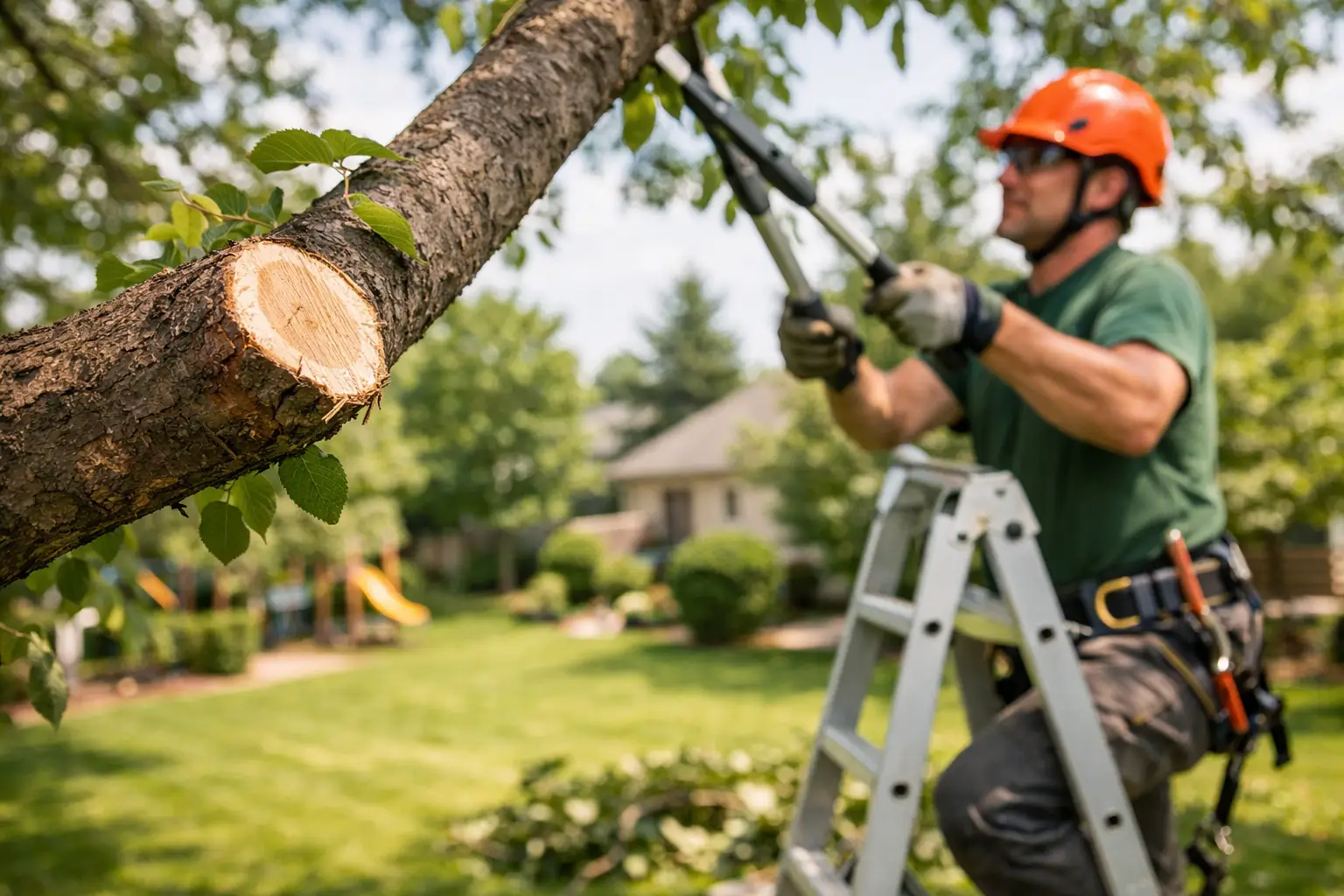
Professional tree pruning starts with a plan, not a chainsaw. The crew should identify the tree’s condition, the desired result, access challenges, nearby structures, and where branches can safely be lowered. On tight residential lots or busy commercial sites, protecting landscaping, pavement, fences, and buildings takes just as much care as making the cuts.
Cleanup matters, too. Branches, brush, and sawdust should not be left for the property owner to manage unless that arrangement was discussed beforehand. Men in Green approaches pruning with the same attention to safety, clear communication, and complete cleanup that Middle Tennessee property owners expect from a family-operated tree care crew.
A properly pruned tree should still look like a tree when the work is complete. Its canopy may be safer, cleaner, and better balanced, but it should not look stripped, chopped back, or misshapen. When a tree cannot be made safe through pruning, a qualified provider should explain why and discuss removal options plainly.
If branches are beginning to crowd your roofline, limit access, or raise concerns before storm season, a timely assessment can prevent a manageable maintenance need from becoming an urgent repair. A safer, healthier property often starts with a few well-chosen cuts and the experience to make them count.