A mature tree can add shade, privacy, and real value to a property. But when it starts leaning over a roof, dropping large limbs, showing decay at the base, or interfering with a project, it can quickly become a serious concern. Tree removal is not usually the first choice, but it is sometimes the safest and most practical one.
For homeowners, property managers, HOA boards, and landowners across Middle Tennessee, the right decision starts with an honest assessment. A tree may look healthy from the driveway while hidden decay, root damage, or a weak branch structure creates a risk that only becomes obvious in high wind, saturated soil, or ice.
When Tree Removal Is the Right Answer
A tree does not need to be completely dead before it creates a hazard. In fact, trees in decline can be more unpredictable than trees that have already fallen. Warning signs include major cracks in the trunk, large dead limbs, hollow areas, peeling bark, mushrooms around the root flare, or a noticeable lean that was not there before.
Root problems deserve close attention. Construction activity, soil compaction, trenching, repeated vehicle traffic, and changing drainage patterns can damage roots without showing immediate symptoms above ground. A tree may continue to leaf out for years while its support system weakens underground. When the ground becomes saturated during a Tennessee storm, that weakened root system may not hold.
Location matters just as much as condition. A declining tree in the back corner of an open field may be monitored. The same tree over a home, driveway, playground, parking lot, fence, or power line needs a much more cautious approach. Risk is not only about whether a tree could fail. It is also about what could be damaged if it does.
Removal can also make sense when a healthy tree blocks planned construction, crowds a foundation, interferes with utility access, or prevents safe use of the property. In those cases, the goal is not simply to take down a tree. It is to prepare the site responsibly while limiting damage to the surrounding landscape.
Common warning signs property owners should not ignore
Some issues call for prompt professional attention, especially after storms. Watch for a fresh lean, soil lifting around the base, split trunk sections, hanging limbs, exposed roots, or branches resting on a roof or utility line. A tree that suddenly loses leaves during the growing season or develops extensive dead growth at the top can also be in decline.
Do not try to pull down hanging limbs, climb a damaged tree, or cut branches near utility lines. Storm-damaged wood can be under extreme tension, and a limb that appears stable can shift without warning. Keeping people, vehicles, and pets out of the area is the right first move.
Why Professional Tree Removal Is Different
Removing a small, open-grown tree is one thing. Removing a large oak between a house and a fence, or a dead tree over a commercial parking area, is another. Professional work depends on planning the job before any cut is made.
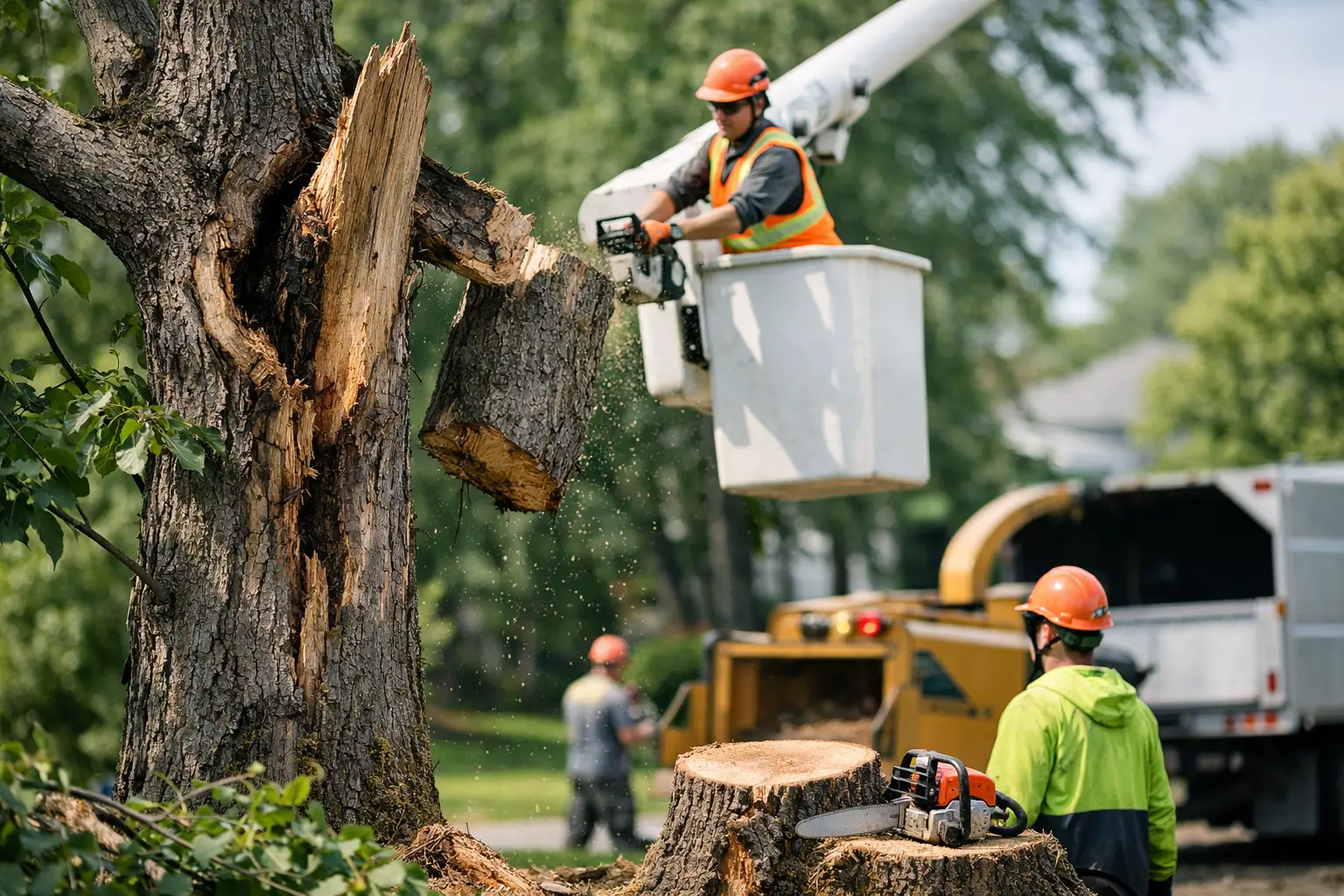
A qualified crew considers the tree’s height, lean, weight distribution, branch structure, decay, wind direction, access points, nearby structures, utilities, and landing zone. They also determine whether the tree can be felled in one controlled direction or must be dismantled in sections. The right equipment may include a bucket truck, crane, skid steer, compact loader, rigging systems, or a stump grinder, depending on the property and the job.
The lowest estimate is not always the best value if it leaves important questions unanswered. Property owners should know what the crew plans to remove, whether debris hauling is included, how access will be protected, and what will happen to the stump. Clear scope and clear communication prevent surprises after the work begins.
Professional removal should also include attention to the site after the tree is down. Heavy equipment can be necessary, but experienced operators plan travel paths to reduce disturbance to lawns, irrigation, pavement, gates, and landscaping. Full cleanup matters. A property should not be left with brush piles, scattered wood, or damaged areas that the owner must handle alone.
Pruning may be the better option
Not every troublesome tree needs to come down. Strategic pruning can remove deadwood, reduce weight on an overextended limb, improve clearance over a roof or driveway, and correct branch conflicts before they become larger problems.
The difference is condition. If the trunk, roots, and main branch unions are sound, pruning may extend the tree’s useful life. If decay is advanced, the tree is structurally compromised, or it has already begun to fail, trimming can create a false sense of security. An honest recommendation should weigh the tree’s health, its location, and the consequences of failure rather than treating removal as the answer to every concern.
What Happens During a Safe Removal Project
A well-run project begins with a site visit and estimate. This is the time to point out concerns such as septic systems, irrigation lines, gates, soft ground, landscaping features, underground utilities, and access restrictions. For commercial sites, the plan may also need to account for customer traffic, employee parking, delivery schedules, and safe work zones.
On removal day, the crew establishes a controlled area and identifies where equipment, brush, logs, and trucks will be positioned. If the tree must come down in sections, branches and trunk pieces are lowered or directed into a planned drop zone. This approach takes more time than simply cutting from the ground, but it is often the only safe method near buildings and other valuable property.
Once the tree is removed, the remaining stump is a separate decision. Leaving it in place may be acceptable in a wooded area, but it can be a problem in a lawn, landscape bed, future building site, or pasture entrance. Stump grinding removes the visible stump below grade. Where future use requires it, root removal and additional site preparation may be needed as well.
For larger acreage or development work, removal can be part of a broader land-management plan. Bush hogging, brush removal, lot clearing, and selective tree work can open up usable ground without stripping every tree from the property. The right plan depends on whether the land is being prepared for a home, barn, driveway, recreation area, commercial expansion, or ongoing maintenance.
Timing Matters, but Safety Comes First
Property owners often ask whether there is a best season for removing a tree. In many cases, cooler months can offer easier access through dormant landscaping and less interference with active lawn use. However, a hazardous tree should not wait for a preferred season. If it has become unstable near a home, road, or occupied area, timely action is more important than the calendar.
Storms frequently change the situation. High winds can expose weak branch unions, while heavy rain can soften soil around compromised roots. After severe weather, inspect your property from a safe distance. Look upward before walking under the canopy, and check around driveways, outbuildings, fences, and parked vehicles. If something looks questionable, arrange an assessment before the next round of weather arrives.
For property managers, recurring inspections are often more cost-effective than reacting to every emergency. Trees near entrances, sidewalks, common areas, parking lots, and buildings deserve regular attention. Addressing dead limbs and early decline can help reduce disruptions, complaints, and avoidable damage.
Choosing a Tree Care Team You Can Trust
The crew working on your property should be properly insured, equipped for the job, and willing to explain the plan in plain language. Ask whether cleanup is included, how the work area will be protected, and whether stump grinding is available if you need it. For trees near structures or difficult access areas, experience with sectional removal and rigging is especially important.
Local experience also counts. Middle Tennessee properties can include steep lots, clay soil, mature hardwoods, tight suburban access, open farm ground, and storm-prone tree lines. A crew that understands those conditions can make better decisions before equipment ever enters the property.
Men in Green provides straightforward assessments for residential and commercial properties, with safety, punctual scheduling, and complete cleanup at the center of the work. Whether the need is one hazardous tree, storm debris, a stump in the way, or preparation for a larger land-clearing project, the best next step is a clear estimate from a team that treats the property with respect.
A tree can take decades to grow, so removal should never be casual. But when its condition or location puts people and property at risk, a careful decision now can prevent a far more costly emergency later.