A land clearing contractor does more than knock down brush and remove a few trees. The work sets the condition of your property for what comes next, whether that is a new home, a driveway, fencing, pasture, commercial expansion, or simply safer ground around the buildings you already have. Done right, land clearing removes obstacles while protecting the areas, trees, and soil you intend to keep.
For Middle Tennessee property owners, that matters because every site is different. A wooded lot in Franklin may need careful tree selection near an existing home. An overgrown field in Rutherford County may need bush hogging and brush removal before it can be maintained. A development site may require larger-scale clearing, stump removal, and dependable scheduling to keep the next phase moving.
What a Land Clearing Contractor Should Assess First
Clearing should begin with a walk-through, not a piece of equipment. Before work starts, the contractor needs to understand the purpose of the site, the boundaries of the work area, access points for equipment, grade changes, drainage paths, utilities, structures, and the condition of existing trees.
The goal is not always to clear every tree. Mature hardwoods can add value, shade, and curb appeal when they are healthy and positioned well. On the other hand, dead, leaning, storm-damaged, or poorly rooted trees can become a safety concern once surrounding vegetation is removed. Opening a site changes wind exposure and drainage patterns, so keeping the wrong tree can create a future problem.
A responsible assessment also identifies what should stay protected. That may include a tree line along a neighbor’s property, a wooded buffer, a creek-side area, a septic field, established landscaping, or a stand of trees planned for shade. Clear instructions up front prevent costly misunderstandings once machines are on the ground.
Land Clearing Is Not One Service
Property owners sometimes use the term land clearing to describe any job involving overgrowth. In practice, the right scope depends on the condition of the land and how you plan to use it afterward.
Light overgrowth may only need bush hogging. This is often the practical choice for tall grass, weeds, briars, and smaller brush on fields, lots, and acreage. It restores visibility and makes routine maintenance possible without disturbing the ground as heavily as full clearing.
Heavier brush, volunteer trees, and dense undergrowth may require cutting, removal, and hauling. If trees are part of the work, the crew may need to remove them in sections, particularly near homes, fences, power lines, parking areas, or neighboring properties. This is not a job for pushing trees over and hoping they fall where expected.
Stumps are another decision point. If the area will remain natural or be used for limited recreation, some stumps may be left in place. If you plan to build, install a driveway, mow regularly, establish pasture, or create usable yard space, stump grinding and root removal are often worth the additional work. Leaving stumps can interfere with grading, mowing, drainage, and construction equipment later.
The Right Equipment Protects the Property
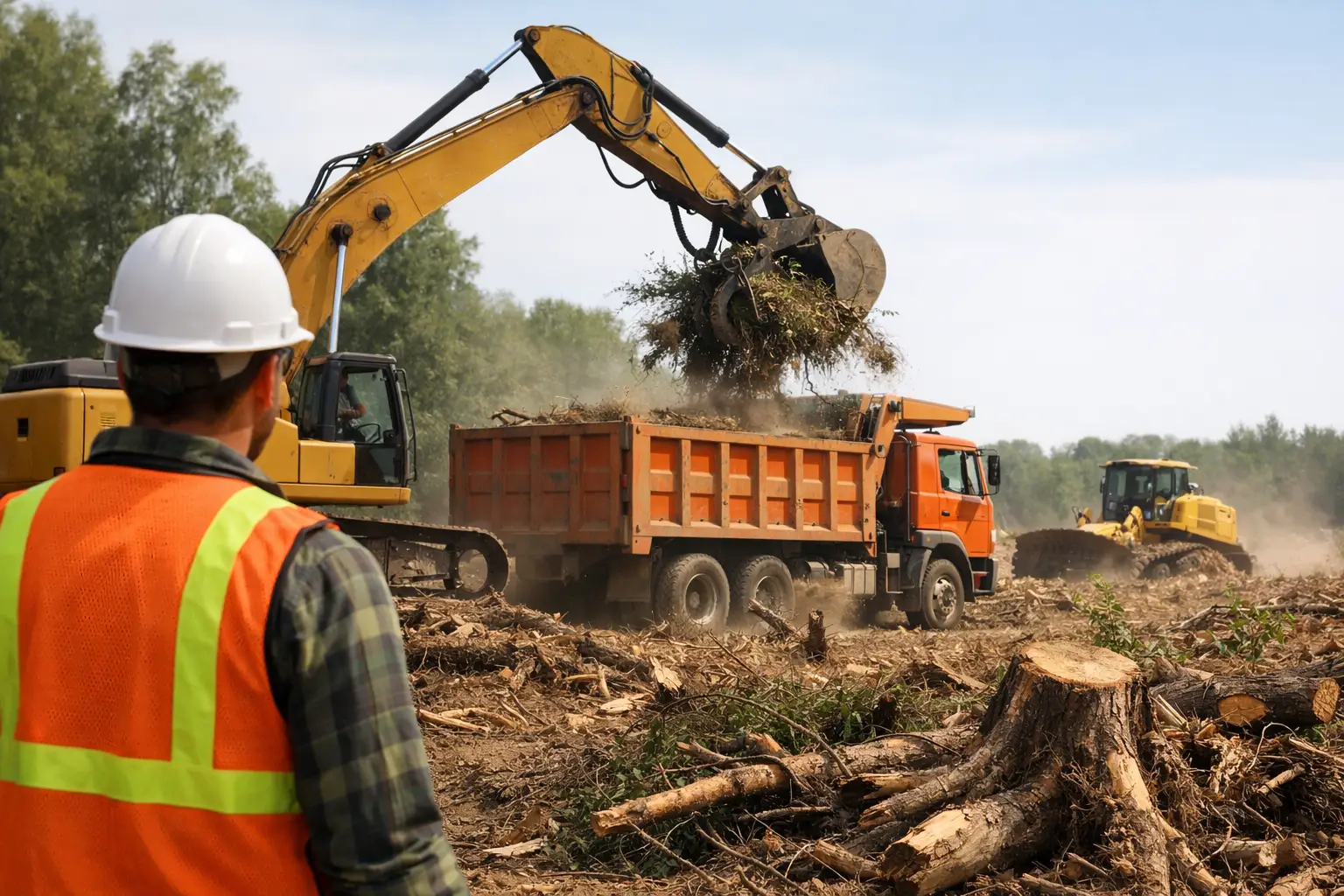
A qualified crew matches equipment to the job instead of bringing one machine to every property. Compact equipment may be better around homes, tight access areas, and finished landscaping. Larger machines may make more sense for open acreage, commercial sites, or heavy timber where efficiency and production matter.
Equipment choice affects more than speed. It can influence soil compaction, turf damage, access, and cleanup requirements. A good contractor will explain how equipment will enter the property, where material will be staged, and what areas may need temporary protection.
Tree work also calls for specialized tools and experienced operators. Removing a large tree near a structure often requires controlled cuts, rigging, cranes, or directional felling methods based on the available space. The lowest estimate may not account for the planning, labor, insurance, and equipment needed to complete that work safely.
Ask What Happens to Debris and Stumps
A clean site should be part of the conversation before the estimate is accepted. Land clearing creates logs, limbs, brush, chips, and sometimes large root balls. Those materials can be hauled away, chipped, stacked in an agreed location, or processed differently based on the project and the property’s needs.
There is no single best option. Hauling material off-site creates a cleaner finish but can add labor and disposal costs. Chipping may be useful for mulch in selected areas, but it is not always appropriate near future construction or where a completely bare site is required. Burning may be restricted, unsafe, or impractical depending on conditions and local requirements.
Ask specifically whether the estimate includes debris removal, stump grinding, root removal, final raking, and hauling. A clear estimate should separate these items when needed, so you know whether you are paying for rough clearing or a site that is ready for the next contractor.
Plan for Drainage, Erosion, and Site Access
Removing vegetation can reveal problems that were easy to miss when the property was overgrown. Low spots, washouts, exposed rock, old fencing, and abandoned materials often appear after brush is cleared. That is one reason it helps to treat clearing as the first step in a site plan rather than the final step.
Drainage deserves particular attention. Trees and brush can hide the natural movement of water, but clearing should not send runoff toward a home, driveway, neighboring lot, or roadway. On sloped ground, aggressive disturbance can lead to erosion if the next phase of work is delayed. Your contractor may coordinate with your builder, grading contractor, surveyor, or other professionals when the project calls for it.
Access is equally important. A new drive, gate opening, trail, or equipment path needs enough width and clearance for its intended use. Clearing a narrow route may look adequate until a delivery truck, trailer, fire apparatus, or construction machine needs to get through. Discuss intended traffic before the work begins.
Warning Signs When Choosing a Contractor
Land clearing is a significant property decision, so it pays to ask direct questions. Be cautious when a contractor cannot explain how they will protect structures, handle debris, or address trees near utilities. You should also be wary of vague pricing that does not define the work area or finish level.
A dependable contractor should be prepared to discuss insurance, scheduling, equipment access, cleanup, and the risks specific to your site. They should also be willing to tell you when a requested approach is not the safest or most cost-effective option. Honest guidance may mean recommending selective clearing instead of full removal, or bush hogging first so you can better evaluate the land.
For commercial properties, HOAs, and multifamily communities, communication is especially important. Work may need to be scheduled around residents, customers, deliveries, school traffic, or active operations. A crew that manages the work zone, protects common areas, and removes debris promptly helps keep the property safe and presentable throughout the project.
A Better Start for the Work Ahead
The best land clearing work creates a usable, safer property without creating unnecessary damage or leaving a mess for someone else to solve. It gives homeowners and property managers a clear view of what they own and a practical foundation for maintenance, construction, recreation, or growth.
With more than 30 years of regional experience, Men in Green approaches clearing with the same priorities that guide tree removal and storm cleanup: careful planning, safe work practices, professional equipment, and a clean job site. Before making decisions about your land, start with a clear on-site assessment and an estimate that explains exactly what the work will include.