A field can go from manageable to inaccessible in one growing season. Tall grass, briars, saplings, and woody brush can hide holes, fence lines, discarded debris, and the uneven ground that creates real safety concerns. Professional bush hogging services bring neglected acreage, lot edges, trails, and open spaces back under control without treating every overgrown area like a full land-clearing project.
For homeowners, farms, HOAs, commercial sites, and landowners in Middle Tennessee, the right approach depends on what is growing, how steep or wet the ground is, and what the property needs next. Sometimes the goal is a clean-looking field. Other times, it is access for a surveyor, safer grounds around a building, or a first step before construction and more extensive clearing.
What Bush Hogging Is Designed to Handle
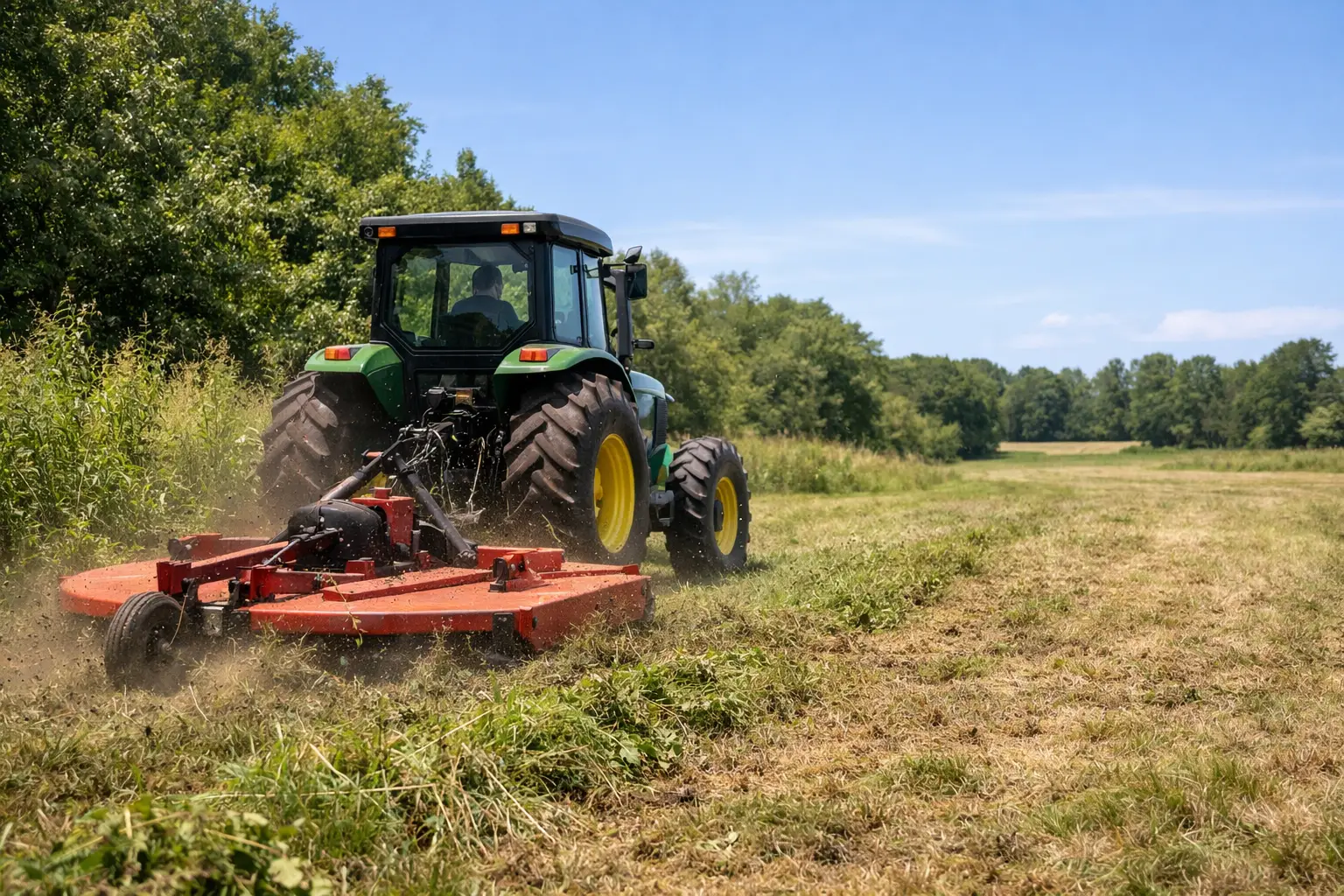
Bush hogging uses a heavy-duty rotary cutter pulled or mounted behind commercial equipment. Unlike a finish mower built for maintained lawns, a bush hog is intended for rougher conditions and taller, denser vegetation. It can cut through thick grass, weeds, small brush, and young woody growth that would overwhelm standard mowing equipment.
This work is especially useful on vacant lots, pastures, field borders, utility-access areas, drainage corridors, large residential properties, and commercial acreage. It can restore visibility around a property and make routine inspections, fence repairs, and future maintenance much easier.
Bush hogging is not the same as land clearing. A rotary cutter can cut vegetation down close to ground level, but it does not remove large trees, mature stumps, root systems, boulders, or heavy debris. If a site is covered in substantial timber or established invasive growth, the property may need a combination of brush cutting, tree removal, stump grinding, and debris removal. An honest assessment at the start prevents a customer from paying for the wrong service.
When Bush Hogging Services Make Sense
Overgrowth is not only a curb-appeal issue. When vegetation becomes dense, it can create places for pests and snakes to hide, obscure drainage problems, and make it difficult to see whether a fence, ditch, or access road needs attention. On commercial and multifamily properties, unmanaged edges can also make an otherwise well-kept site look neglected.
Bush hogging is often a practical fit when you need to reclaim land without changing the basic character of the property. A landowner may want to keep a field open for recreation or future use. A homeowner may need to clear a back acre that has become too thick to walk. A facility manager may need better visibility around a retention area or perimeter fence.
It is also valuable before other work begins. Cutting down heavy vegetation can help crews identify hidden obstacles and give surveyors, contractors, fencing crews, and tree-service teams safer access. On a future building site, it is commonly the first stage of preparing the ground for the next decision.
The Difference Between Cutting and Clearing
The most important question is not simply, “How tall is the grass?” It is, “What is actually growing there?” Tall grass and light brush are typically good candidates for bush hogging. Dense stands of small saplings may be manageable depending on their size and diameter. Larger trees, tangled vines around mature trunks, old wire, concrete, dumped materials, and heavy fallen limbs require a different plan.
A professional crew should walk or inspect the area before starting. That inspection helps identify hazards such as culverts, steep slopes, soft ground, buried obstacles, exposed utilities, and items that could damage equipment or become projectiles. It also helps determine whether a single pass will meet the goal or whether follow-up work is needed.
For example, cutting a thick field may make it usable immediately, but it will not prevent regrowth. If the area has aggressive brush or young trees, those plants may return unless the property is maintained on a schedule or treated with a broader vegetation-management plan. That does not make bush hogging less useful. It means the service should match the expected result.
Why Equipment and Experience Matter
A small mower can leave a property looking uneven, get stuck in rough terrain, or suffer damage when it hits concealed material. Commercial bush hogging equipment is built for demanding work, but it still needs an operator who understands how to work safely around slopes, fences, ditches, structures, and standing trees.
The operator must also know when to stop. Wet Middle Tennessee soil can quickly become rutted by heavy equipment. A field that looks dry at the entrance may be soft near a creek, drainage area, or low spot. In those conditions, waiting for better ground conditions can protect the land and avoid unnecessary repair work.
Safety also matters for nearby homes, vehicles, roads, and people. Rotary cutters can throw debris when a site has not been inspected or when the operator works too close to hidden material. Proper equipment, appropriate cutting patterns, and attention to the work area help reduce that risk.
A Better Plan for Recurring Property Maintenance
Many properties do not need a major clearing project every year. They need consistent maintenance before growth gets out of hand. A regular bush hogging schedule can be more cost-effective than waiting until grass, brush, and volunteer trees have taken over.
The right frequency depends on the property. Productive fields, vacant commercial acreage, and open lots may need attention once or twice during the growing season. Areas with fast-growing brush, frequent rain, or a higher need for visibility may need more frequent service. A property used only occasionally for hunting, recreation, or future development may be suitable for seasonal cutting.
Timing matters as well. Cutting before vegetation goes to seed may help limit future spread in some areas. Late-season cutting can improve winter access and make it easier to assess trees, fences, drainage, and ground conditions when foliage is down. However, wildlife activity, wet weather, and planned construction schedules should all be considered before setting a date.
Preparing Your Property Before the Crew Arrives
Property owners can help a bush hogging job go smoothly by identifying known hazards before work begins. If you know where old fencing, irrigation lines, septic components, utility pedestals, landscape features, or debris piles are located, point them out. Marking these items can save time and help protect both the property and the equipment.
It is also helpful to clarify what should remain untouched. That may include a stand of trees, a pollinator area, a creek buffer, a fence row, or an established path. Clear boundaries make it easier for the crew to deliver the result you expect rather than simply cutting everything in sight.
If access is limited by a locked gate, narrow driveway, parked vehicles, or low-hanging limbs, address those details before the scheduled service. Large equipment needs room to enter, turn, and work safely. A quick conversation before the job can prevent delays on service day.
What a Professional Result Should Look Like
A properly bush hogged area should be visibly more open, accessible, and manageable. The cut material is generally left on the ground to break down naturally, which can help return organic matter to the soil. The finish will not look like a closely manicured lawn, and it should not be expected to. Bush hogging is functional land maintenance designed for rough vegetation and usable space.
The quality of the work shows in the details: controlled cutting around obstacles, reasonable attention to edges and access points, no unnecessary damage to trees or structures, and a crew that communicates clearly about conditions found on site. If the property needs additional work beyond cutting, you should receive a straightforward explanation of why and what options are available.
For difficult or overgrown acreage, Men in Green can evaluate whether bush hogging is the right first step or whether the site would benefit from more complete land-clearing work. With more than 30 years of regional experience, the goal is simple: provide honest recommendations, work safely, and leave your property better prepared for what comes next.
An overgrown field does not have to stay off-limits until you are ready for a major project. A well-timed cut can restore access, improve safety, and give you a clear view of the land you own. Request a free estimate when you are ready to put that ground back to work.