A tree does not have to be especially large to be difficult to remove. A smaller tree behind a garage, beside a pool, over a fence, or tucked between homes can require more planning than a large tree in an open field. Difficult access tree removal is about controlling every section of the job when there is little room for equipment, limited drop zones, and valuable property close by.
For Middle Tennessee property owners, these situations are common. Mature trees often grow near homes, driveways, retaining walls, utility lines, sheds, and landscaping that took years to establish. Storm damage can make the situation more urgent, but even a healthy tree may need removal to make room for a new addition, repair a failing fence, improve drainage, or prepare a site for construction.
Why Access Changes the Tree Removal Plan
Open-area tree removal may allow a crew to fell a tree in one controlled direction. That approach is not appropriate when a tree could strike a roof, cross a property line, damage a parked vehicle, or land on a neighboring structure. In tight spaces, the work is usually completed in sections from the top down.
A trained crew evaluates the tree’s height, lean, canopy weight, trunk condition, and surrounding obstacles before choosing a method. The goal is not simply to get the tree on the ground. The goal is to remove it without creating a second problem for the homeowner, neighbor, or property manager.
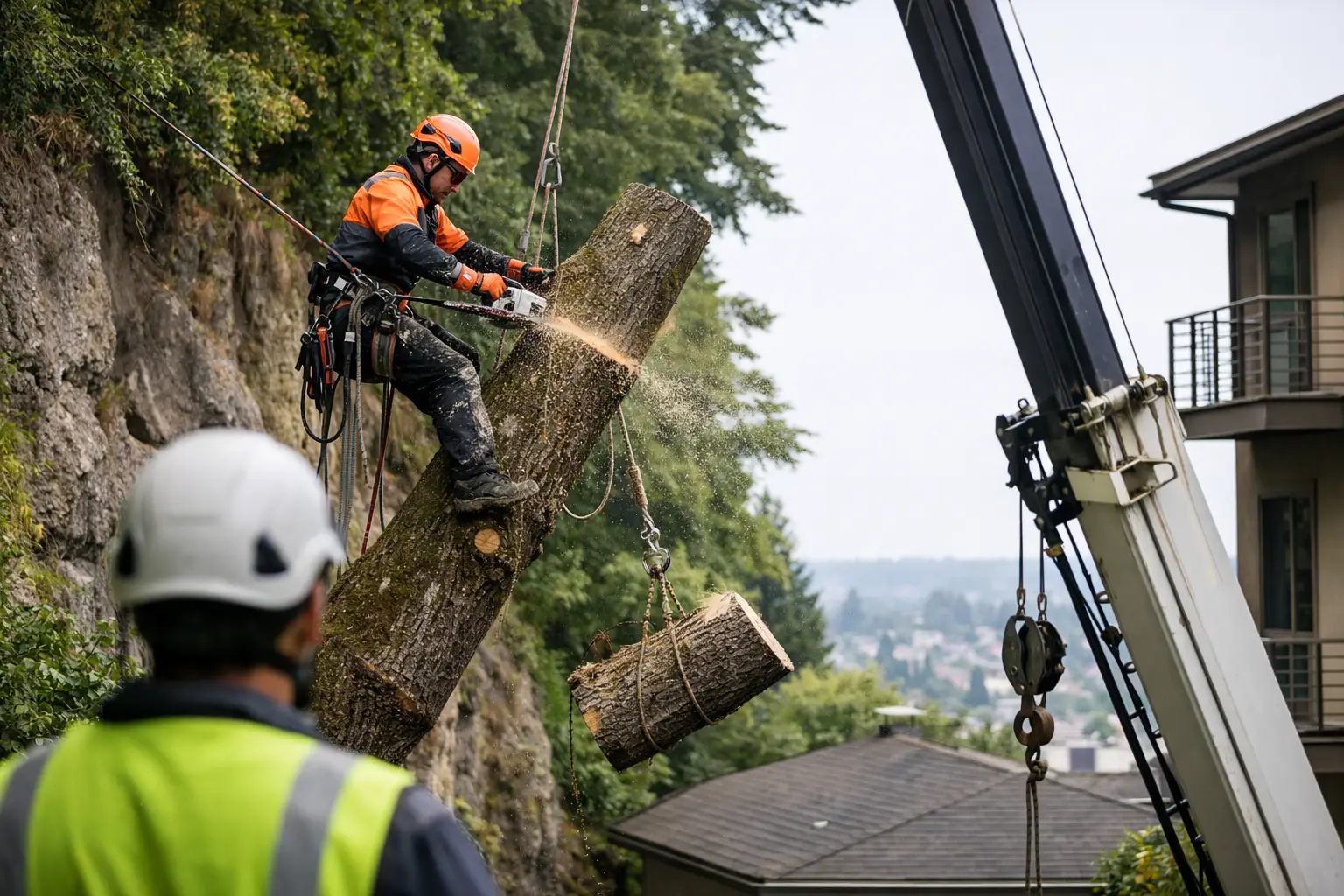
Access also affects how crews reach the work area and how they remove debris. A truck and chipper may fit down one driveway but not another. A fenced backyard may have a narrow gate, soft ground, steep grade, or landscaping that cannot support heavy traffic. In some cases, crews use climbing and rigging techniques to lower limbs and trunk sections safely. In others, an aerial lift or crane may be the right tool, provided there is a safe location to set it up.
The safest method depends on the property. More equipment is not automatically better if it creates unnecessary lawn damage or cannot be positioned safely.
Common Difficult Access Tree Removal Situations
Every property has its own challenges, but several conditions repeatedly call for a more careful removal plan:
- Trees growing behind homes, garages, sheds, or commercial buildings
- Trees with limbs extending over roofs, fences, patios, pools, and outdoor equipment
- Trees located on slopes, creek banks, wooded lots, or soft ground
- Trees in narrow side yards with limited gate or driveway access
- Trees near service lines, communication lines, or utility infrastructure
A tree beside a house often has no safe direction to fall. Instead, a climber may remove branches first, then cut manageable pieces of trunk. Rigging ropes, friction devices, and controlled lowering systems help guide material into a designated landing area rather than allowing it to drop freely.
This work takes time because control matters. Cutting larger sections may seem faster, but the potential cost of one uncontrolled piece of wood is much higher than the time saved.
Trees Near Power Lines Need Special Attention
Power lines are not a routine obstacle. If a tree is touching, leaning into, or dangerously close to energized lines, the utility company may need to be involved before removal begins. Homeowners should never attempt to trim or pull branches away from electrical service lines themselves.
A professional tree crew can assess the visible hazards and explain the next safe step. Depending on the line and location, qualified utility line-clearance personnel may be required. The right answer is not always immediate removal. Sometimes it is securing the area, contacting the utility provider, and scheduling work once the electrical hazard has been addressed.
How Professionals Protect a Tight Job Site
Difficult access tree removal starts before the first cut. A proper site review identifies what must be protected and how the crew will enter, work, lower material, and clean up afterward. For a homeowner, this should mean clear communication rather than surprises on removal day.
Crews may protect turf and hard surfaces with ground mats or carefully plan travel routes to reduce impact. They establish work zones so family members, pets, tenants, customers, and vehicles stay clear of active cutting and lowering areas. If a fence panel needs temporary removal for access, that should be discussed ahead of time rather than discovered after the crew arrives.
The tree itself is inspected for dead wood, cracks, decay, insect damage, cavities, and unstable limbs. These conditions can change how a climber moves through the canopy and where ropes can be anchored. A tree that appears solid from the ground may have internal decay that makes certain cuts or climbing positions unsafe.
Once work begins, communication between crew members is constant. The person cutting aloft, the ground crew managing ropes, and the equipment operator must work from the same plan. That coordination is especially important near homes and commercial buildings where there is little margin for error.
Equipment Matters, but Experience Matters More
Modern equipment gives professional crews more options, particularly when access is limited. Compact equipment can move through tighter areas than larger machines. Chippers reduce brush volume quickly. Aerial lifts can provide a stable working position when the ground and access route allow. Cranes can help lift sections away from structures in certain high-risk situations.
Still, equipment is only useful when it matches the site. A crane may be an excellent option for a tree over a house, but it requires adequate setup space, stable ground, and a plan for traffic or neighboring property access. An aerial lift may be safer than climbing on one job and impossible to position on another.
The crew’s judgment is what turns equipment into a safe solution. With more than 30 years of regional experience, Men in Green understands that Middle Tennessee properties often combine mature trees, rolling terrain, clay soil, narrow access, and closely spaced structures. A careful estimate should account for those conditions before the job is scheduled.
What Affects the Cost of Difficult Access Tree Removal?
Access restrictions are one of the main reasons two similarly sized trees can have very different removal costs. The price reflects the labor, equipment, time, and risk involved in safely completing the work.
A tree that can be felled into an open area generally requires less rigging and fewer cuts than one hanging over a roof. A tree in a fenced backyard may require crews to carry brush and wood farther by hand or use smaller equipment. Steep slopes, heavy decay, multiple trunks, emergency storm conditions, and limited staging space can also add complexity.
Property owners should be cautious of estimates based only on a photo or a quick look from the street. Photos are helpful for starting a conversation, but an on-site assessment is usually the best way to identify access routes, underground concerns, overhead hazards, and cleanup needs. A clear estimate should explain the scope of work, including whether brush removal, wood removal, stump grinding, and final cleanup are included.
How to Prepare Before the Crew Arrives
You do not need to solve the access problem yourself, but a few simple steps can help the work go smoothly. Move vehicles away from the work area and provide access to gates or locked sections of the property. Let the crew know about septic systems, irrigation heads, invisible pet fences, landscape lighting, or other features that may not be visible above ground.
If the tree sits near a shared fence, driveway, or neighboring building, giving nearby neighbors advance notice is courteous and can prevent confusion during the job. For commercial properties and HOAs, it is also wise to identify tenant parking, delivery schedules, pedestrian routes, and any hours when work must be limited.
Do not stack furniture, planters, or stored items beneath a tree scheduled for removal. Clearing the immediate area gives the crew room to work and reduces the chance that belongings are damaged during normal operations.
Do Not Wait for a Tight-Space Tree to Become an Emergency
A dead limb over a roof, a tree leaning farther after heavy rain, or a cracked trunk near a driveway deserves prompt attention. Not every concern requires immediate removal. Sometimes pruning, cabling, or monitoring is the better recommendation. But waiting until a tree fails during a storm can limit options and increase damage.
If a tree is difficult to reach, the answer is not to take chances with a ladder, a chainsaw, or an inexperienced crew. Ask for an honest on-site assessment, understand the removal plan, and choose a team prepared to protect the property as carefully as the tree is removed.