A tree can look fine from the ground and still create a costly risk overhead. A split trunk, dead limbs above a driveway, roots affecting a foundation, or a tree leaning toward a roof all call for a closer look. Tree removal cost is not a one-price service because every tree, property, and safety plan is different. The right estimate should explain the work required, not leave you guessing why one job costs more than another.
For homeowners, HOAs, facility managers, and landowners in Middle Tennessee, the goal is not simply to find the lowest number. It is to have the tree removed safely, protect the surrounding property, and know the job site will be cleaned up when the crew leaves.
What Is the Typical Tree Removal Cost?
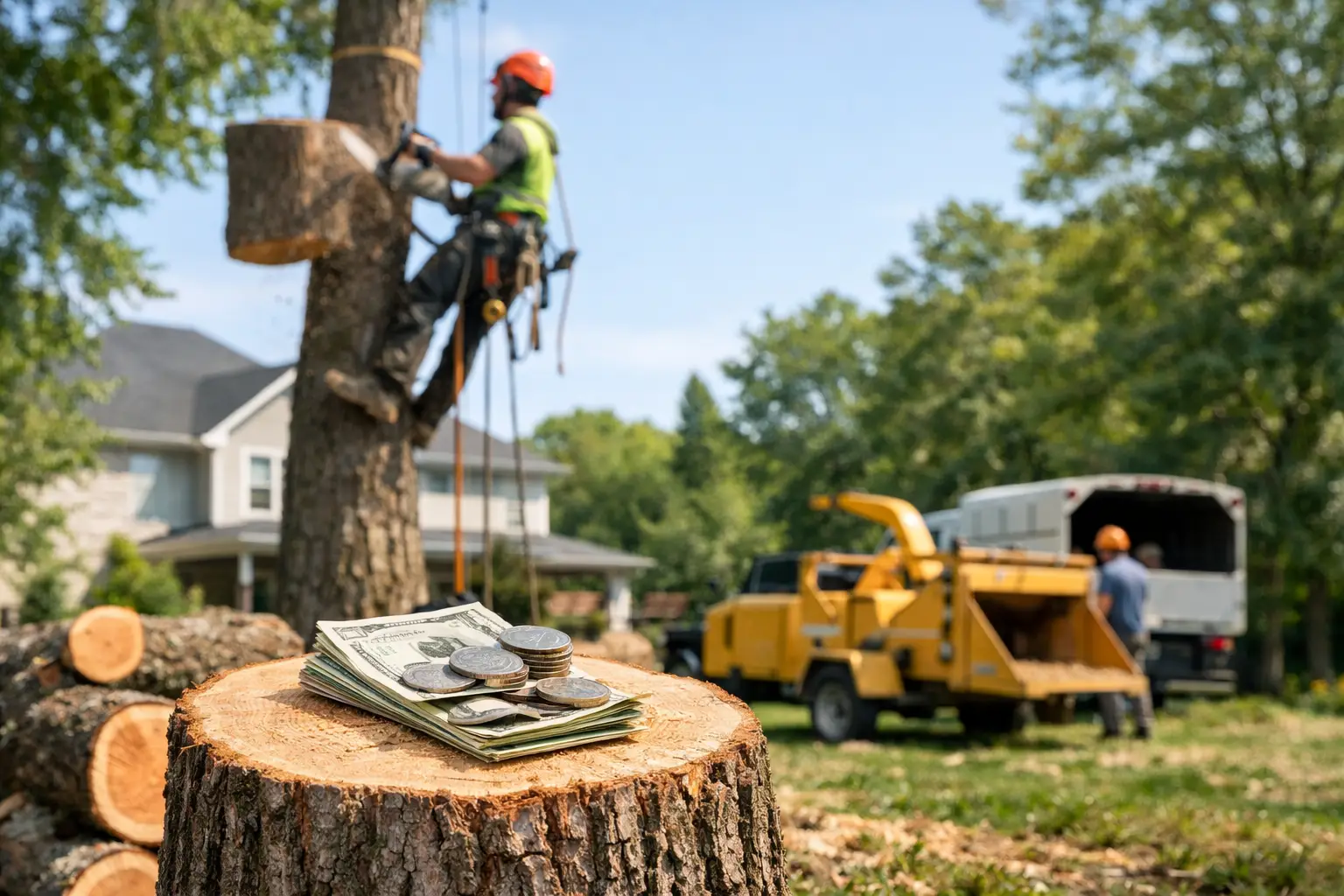
A small, open-area tree may cost a few hundred dollars to remove. A large mature tree can run $1,000 or more, especially when it is close to a home, utility line, fence, pool, road, or neighboring property. Complex removals involving cranes, extensive rigging, storm damage, difficult access, or multiple crews can cost several thousand dollars.
Those broad ranges are useful for planning, but they are not a substitute for an on-site estimate. A 40-foot tree in an open field is a very different job from a 40-foot tree hanging over a garage in a tight neighborhood. The second job may require a climber, ropes, controlled lowering, ground protection, traffic awareness, and more time for cleanup.
A professional estimate should account for the complete scope of work: removal, limb handling, hauling, disposal, cleanup, and any optional stump grinding or root removal. Ask what is included before comparing bids. A low quote can look different once debris hauling, stump work, or site restoration are added later.
The Main Factors That Affect Tree Removal Cost
Tree size and condition
Height, trunk diameter, canopy spread, and total wood volume are major cost drivers. Larger trees require more cutting, more controlled lowering, more crew time, and more hauling capacity. A tall oak with heavy limbs is not priced the same as a small ornamental tree, even if both occupy a similar footprint.
Condition matters just as much. A healthy tree may be more predictable to climb and dismantle. A dead, decaying, hollow, or storm-damaged tree can be unstable. Brittle limbs and compromised trunks increase the risk to the crew and the property below, which often means a more careful removal plan.
Location and access
Where the tree stands can change the estimate quickly. A tree with clear access from a driveway or open yard may allow equipment to work efficiently. A tree behind a home, inside a fenced backyard, on a steep slope, or in a narrow side yard takes more planning and labor.
Obstacles also matter. Rooflines, utility lines, sheds, irrigation systems, landscaping, patios, septic areas, retaining walls, and neighboring structures may require sections of the tree to be lowered carefully rather than dropped. That slower, more controlled process is often the safest option.
For commercial properties and multifamily communities, access may involve additional considerations such as parking management, pedestrian safety, loading areas, business hours, and coordination with tenants or property managers. Good planning helps prevent disruption while keeping the site safe.
Equipment and crew requirements
Some trees can be removed with a standard climbing crew and ground support. Others require lifts, cranes, skid steers, chippers, or specialized rigging. Equipment is not used to inflate a price. It is used when it improves safety, protects the property, or makes a difficult job possible.
A crane removal, for example, may cost more than a basic removal but can be the safer choice when a large tree has no safe drop zone. It can also reduce the number of times heavy sections must be moved across a lawn or near buildings. The best approach depends on the tree and the site, not a one-size-fits-all method.
Cleanup and disposal
Tree removal produces more material than many property owners expect. Branches must be chipped or loaded, logs may need to be cut and hauled, and the work area should be cleared of debris before the crew leaves.
Most customers want full cleanup included, particularly when the tree is near a home, office, retail center, or common area. If you want logs left for firewood, chips left for mulch, or brush moved to a designated area, discuss that during the estimate. Those choices can affect hauling needs and the final price.
Stump grinding and root removal
Removing a tree and removing its stump are separate services. Leaving the stump may be fine in a wooded area, but it can become a tripping hazard, mowing obstacle, pest concern, or barrier to landscaping and construction.
Stump grinding cost depends on stump diameter, root flare, access, and nearby utilities or hardscaping. If you are preparing for a patio, fence, new grass, driveway work, or building project, ask whether root removal is needed as well. Grinding below grade is often enough for landscaping, while excavation or root removal may be necessary for certain site plans.
Why Emergency Tree Work Often Costs More
After a severe storm, a fallen or partially fallen tree needs a fast and careful response. Emergency work may involve downed limbs, blocked driveways, damaged roofs, unstable trees, wet ground, nighttime conditions, or limited access. The priority is making the area safe and preventing further damage.
Storm cleanup can cost more because the work is urgent and conditions are less predictable. A tree resting on a structure cannot be handled like a routine removal. The crew may need to stabilize sections, coordinate around damaged areas, and remove material in a precise order to avoid creating additional harm.
If a tree is not an immediate emergency but has visible cracks, fresh lean, hanging limbs, or root movement after a storm, scheduling an assessment promptly can help you address the risk before the next weather event makes the situation worse.
How to Compare Tree Removal Estimates Fairly
Comparing estimates should be about more than the total at the bottom of the page. Confirm that each company is pricing the same scope of work. One estimate may include hauling and cleanup while another only covers cutting the tree down. One may include stump grinding while another does not.
Ask whether the company is properly insured and whether it has the equipment and experience for the specific removal. This is especially important for trees near homes, power lines, roads, commercial buildings, and shared property boundaries. A low bid that skips safety planning can become expensive if the job causes damage or leaves behind a debris problem.
It is also reasonable to ask how the crew will access the property and protect it. Heavy equipment can be the right tool, but a professional contractor should explain where it will travel and what steps will be taken to limit impact on lawns, driveways, and landscaping.
When Removal Is Worth the Cost
Not every tree needs to come down. Pruning can often address dead limbs, improve clearance, reduce weight on overextended branches, and help a healthy tree remain part of the landscape. Removal becomes the practical choice when a tree is dead, severely declining, structurally unsound, repeatedly dropping large limbs, interfering with construction, or creating a clear hazard.
The timing can also affect your options. Removing a declining tree before it falls usually provides more scheduling flexibility and may be less complicated than emergency removal after a storm. For property managers, proactive inspections and routine maintenance can reduce surprise costs across common areas, parking lots, sidewalks, and building entrances.
A clear estimate gives you the information needed to make a sound decision for your property. Men in Green approaches each job with the same focus: assess the risk honestly, use the right equipment, protect the site, and leave the area clean. When a tree is raising concern, an on-site evaluation is the best place to start.