A mature oak can look perfectly healthy from the driveway while decay spreads inside a major limb or at the base of the trunk. That is why the question of when should trees be inspected is not just about appearance. For Middle Tennessee property owners, regular tree inspections are a practical way to spot hazards before a storm, a fallen limb, or a failed tree puts a roof, vehicle, fence, power line, or person at risk.
Trees are living structures, and conditions can change faster than many owners expect. Heavy rain can loosen saturated soil around roots. High winds can expose weak branch attachments. Insects, disease, and internal decay may develop long before leaves show obvious trouble. A routine inspection gives you time to make a sound decision instead of reacting after damage has already occurred.
When Should Trees Be Inspected?
For most residential and commercial properties, a professional tree inspection at least once a year is a sensible baseline. Properties with large mature trees near homes, parking areas, sidewalks, playgrounds, entrances, or utility lines may need closer attention. The same is true for apartment communities, HOAs, retail centers, farms, and commercial sites where one failing limb can create a serious safety concern.
The best time depends on the tree, its location, and recent conditions. In many cases, late winter through early spring is useful because bare branches make structural issues easier to see. Late summer and fall inspections can also reveal stress following heat, drought, pests, and storms.
Do not wait for a yearly appointment if a tree changes suddenly. An inspection is warranted anytime you see new damage, soil movement, dead limbs, or signs that the tree is no longer stable.
Inspect before storm season and after severe weather
Middle Tennessee weather can put trees through a lot in a short period. Thunderstorms, straight-line winds, tornado activity, ice, and saturated ground all increase the chance of limb or tree failure. Before the seasons when severe weather is most common, inspect trees that could reach a structure, driveway, road, or gathering area if they came down.
After a storm, walk the property from a safe distance. Look for hanging limbs, fresh cracks, split trunks, uprooted roots, branches resting on roofs, and trees leaning more than they did before. A broken limb caught in the canopy may not fall immediately. It can come down days later with another gust of wind or a heavy rain.
Stay away from downed utility lines and never attempt to remove limbs tangled in electrical service. Emergency situations call for experienced crews with the right equipment and a clear safety plan.
Inspect before buying, building, or changing the property
Tree inspections are often overlooked during property improvements. Before building an addition, installing a driveway, clearing land, adding a pool, or starting a commercial project, evaluate the trees affected by the work.
Construction can damage roots through grading, trenching, soil compaction, and changes in drainage. A tree may survive the work initially, then decline over the next few years because its root system was disturbed. On the other hand, a tree that needs removal may be easier and safer to address before construction equipment, new landscaping, or finished structures are in the way.
An inspection helps identify trees worth protecting, trees that may interfere with the project, and trees that present a future risk. It also supports better planning for access, clearing, pruning, and stump removal.
Warning Signs That Need Prompt Attention
Not every tree issue means removal is necessary. Proper pruning can sometimes reduce weight on an overextended limb, remove deadwood, improve clearance, or correct a developing problem. But certain warning signs should be evaluated promptly rather than handled with a ladder and a saw.
Pay particular attention to these conditions:
- Large dead, broken, or hanging limbs, especially over a home, driveway, walkway, or parking area.
- Cracks or splits in the trunk, between major limbs, or at a branch union.
- Mushrooms or fungal growth near the trunk base, which can indicate decay in the roots or lower trunk.
- A new lean, heaving soil, exposed roots, or a root plate that appears to be lifting.
- Cavities, missing bark, deep wounds, or areas of soft, decaying wood.
- Thinning leaves, early leaf drop, dead sections in the canopy, or sudden decline compared with nearby trees.
- Vines, insect activity, or dense growth that hides the trunk and makes it difficult to assess the tree’s condition.
One sign alone does not always tell the whole story. A tree can have a cavity and remain stable for years, while a tree with a small crack in the wrong location may require immediate action. Location matters. A compromised tree in an open field presents a different level of risk than the same tree leaning over a child’s bedroom or a busy HOA sidewalk.
Why Seasonal Checks Matter for Mature Trees
Mature trees add shade, character, and value to a property, but they also have more weight, larger limbs, and a longer history of weather exposure. Older oaks, maples, poplars, hickories, and other common Middle Tennessee trees deserve a closer look when they are near targets.
Winter inspections make it easier to see branch structure without leaves blocking the view. This is a good time to identify crossing limbs, deadwood, weak attachments, and branches extending too far over roofs or driveways. Winter is also a practical season for many pruning projects because crews can access the canopy more clearly and homeowners can prepare before spring storms arrive.
Spring and summer inspections reveal a different set of concerns. Leaf size, leaf color, canopy density, and dead patches can provide clues about the tree’s overall health. Heat and dry periods may expose stress in trees that already have compromised roots. During these seasons, it is also easier to see how branches are affecting rooflines, gutters, signs, sightlines, and vehicle clearance.
Fall is a good time to assess trees after a demanding growing season. It is also a useful window to remove dead or hazardous limbs before winter wind and ice add extra load to the canopy.
A Quick Property Walk Can Catch Changes Early
Property owners do not need to diagnose every tree problem. A simple walk around the property after major weather events and at least a few times each year can help you notice changes worth discussing with a professional.
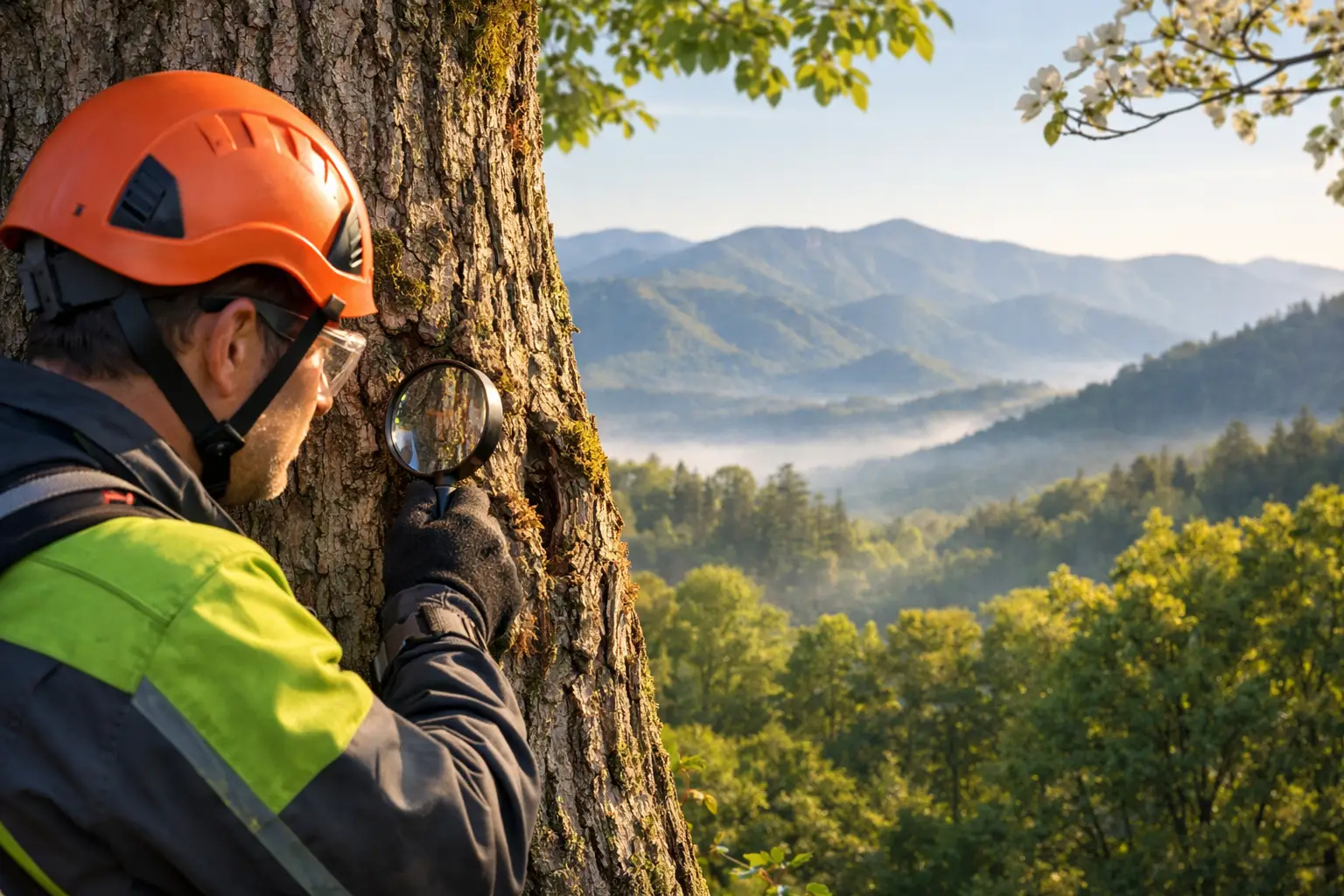
Start by looking up from a safe position. Notice dead branches, uneven canopy growth, branches rubbing together, and limbs extending over areas where people park or walk. Then look at the trunk and base of the tree. Check for cracks, cavities, missing bark, fungal growth, sawdust-like material, and changes in the ground around the roots.
Avoid standing beneath damaged limbs or directly under a leaning tree while inspecting. Use binoculars if needed. If something looks questionable, take a photo from a safe distance and arrange for an on-site assessment.
Inspection Frequency Depends on the Risk
A young ornamental tree in an open yard may only need periodic observation and routine pruning. A large tree near a house may need an annual professional review. Trees on commercial properties often benefit from a documented maintenance schedule because managers are responsible for public-facing areas, employee parking, tenant access, and curb appeal.
Inspection frequency should increase when a property has a history of storm damage, poor drainage, compacted soil, construction activity, or large trees growing close to structures. Trees with previous pruning wounds, visible decay, multiple trunks, or heavy limbs over high-use areas also deserve regular attention.
There is a trade-off in every recommendation. Removing a large tree may be the safest choice in one location, while selective pruning and monitoring may make sense in another. The right answer comes from the tree’s condition, its species, the surrounding site, and what the tree could damage if it fails.
Call Before a Small Problem Becomes an Emergency
Tree work is not a place to guess. Climbing, cutting, and removing heavy limbs near structures or power lines requires training, planning, and proper equipment. Waiting until a limb is on the roof or a tree is blocking the driveway can limit options and increase costs.
For property owners in Smyrna, Nashville, Franklin, Brentwood, Murfreesboro, and surrounding Middle Tennessee communities, Men in Green can assess visible hazards, discuss practical options, and provide a clear estimate for pruning, removal, stump grinding, land clearing, or storm cleanup. The goal is not to remove every mature tree. It is to help you keep healthy trees where they belong and address unsafe ones before they cause trouble.
A few minutes spent looking at your trees after a storm or before a new season can protect a property you have worked hard to maintain. When something looks different, damaged, or unstable, acting early is usually the safest move.