A field can look manageable from the road until you step into it. Thorny vines catch your legs, saplings block the path, fallen limbs disappear under weeds, and a simple mowing job turns into damaged equipment or a safety problem. Professional brush clearing addresses the growth that ordinary mowing cannot handle, giving property owners a safer, more usable piece of land.
For homeowners, that may mean reclaiming the back of a lot, opening access to a fence line, or preparing space for a new shed, driveway, or garden. For farms, HOAs, commercial sites, and development properties, it can mean maintaining visibility, reducing hiding places for pests, and keeping grounds accessible for crews and equipment. The right approach depends on what is growing, how steep or wet the site is, and what you plan to do with the land afterward.
What Brush Clearing Actually Solves
Brush is more than tall grass. It can include thick weeds, briars, invasive vines, volunteer trees, woody shrubs, downed limbs, and small trees that have filled in an open area over time. In Middle Tennessee, fast-growing vegetation can take over fence lines, vacant lots, drainage edges, and acreage quickly, especially after a wet spring and summer.
Left alone, dense growth creates practical problems. It limits visibility around entrances and parking areas, makes inspections harder, blocks access to utility corridors and fencing, and can conceal holes, debris, stumps, or storm-damaged limbs. Overgrowth also holds moisture close to structures and provides cover for ticks, rodents, and snakes.
Clearing does not always mean stripping a property bare. A good plan identifies what should stay, including mature healthy trees, established buffers, and vegetation that helps stabilize a slope. The goal is to remove unwanted growth while protecting the parts of the property that add shade, privacy, drainage control, or long-term value.
When Brush Clearing Needs More Than Mowing
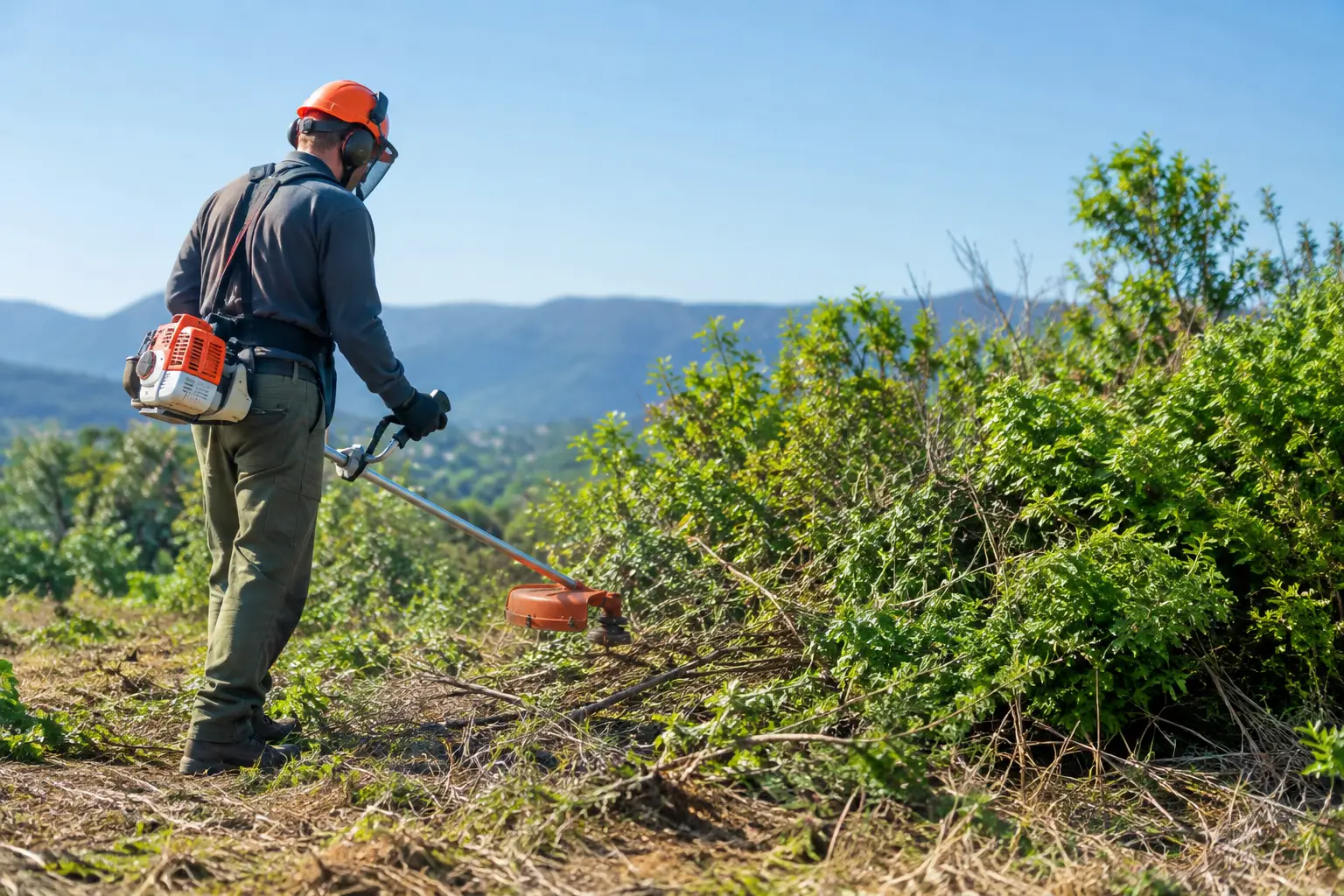
A finish mower works well on regularly maintained turf. A bush hog can handle taller grass and lighter vegetation across open ground. Neither is the right answer when woody stems, tangled vines, hidden stumps, rocks, or thick saplings are involved.
If brush has grown above waist height, small trees are beginning to crowd each other, or you cannot walk the area safely to inspect it, the site needs a closer evaluation. The same is true when growth has spread near buildings, power lines, septic areas, creeks, retaining walls, or property boundaries. Cutting without a plan can damage equipment, leave hazardous stumps behind, or create erosion problems once the vegetation is gone.
Storm debris changes the job as well. Limbs can be under tension, partially supported by brush, or resting where they are not easy to see. A crew should assess those hazards before equipment enters the area instead of treating storm cleanup like routine mowing.
Signs It Is Time to Clear
Property owners often call when they have a specific project in mind, but there are earlier warning signs. Fence lines that can no longer be checked, driveways with limited sightlines, brush pushing against structures, and acreage that is becoming inaccessible all deserve attention. On commercial properties and multifamily communities, overgrowth near walkways, dumpsters, signage, and parking areas can also affect appearance and day-to-day safety.
The sooner unwanted growth is addressed, the more options you usually have. Young saplings and light brush are simpler to manage than several years of established woody growth. Waiting may turn a maintenance task into a larger land-clearing project involving tree removal, stump grinding, hauling, and site preparation.
Match the Method to Your Plans for the Land
The best clearing method is tied to the next use of the property. If your goal is to keep a field open for walking, recreation, or routine maintenance, bush hogging may be enough once heavier material has been removed. It cuts vegetation down efficiently, but it does not remove roots or eliminate every woody stem. Regular maintenance is often needed to keep growth from returning.
If you are preparing for construction, a driveway, a fence installation, or new landscaping, the work may need to go further. Trees, brush, stumps, and roots can interfere with grading, foundations, drainage, and underground work. In those cases, a clear scope matters: what is being removed, what is being left in place, how debris will be handled, and whether stumps and roots need to come out.
Selective clearing is often the best choice for residential lots. Removing crowded saplings, invasive growth, and dead material can improve access and appearance without losing the mature trees that make a property feel established. On larger tracts, clearing may be phased so that only the areas needed now are opened, helping control cost and disturbance.
A Safer Brush Clearing Process Starts Before Equipment Arrives
The work begins with a walk-through. Before cutting starts, the crew needs to understand the property lines, slopes, gates, drainage areas, existing structures, utility concerns, and the location of trees or landscaping worth protecting. Access matters too. A machine that is right for an open field may not be right for a narrow backyard or a soft, sloped lot.
It is also important to identify potential utility conflicts. Property owners should never assume an old-looking line is inactive or that an area is clear simply because no marker is visible. Underground utilities should be located before digging, stump removal, or root work begins. Overhead electrical lines require special caution, particularly when tall brush contains bent or broken limbs.
During the job, experienced operators work in a sequence that keeps the site controlled. Larger hazards and woody material are handled first, then brush is cut and gathered as appropriate for the scope. Cleanup should not be an afterthought. A cleared site still needs attention to branches, debris piles, cut material, and any remaining stumps that could pose a tripping or equipment hazard.
Protect the Ground Beneath the Growth
Removing brush can reveal a problem that the vegetation was hiding: soft soil, washouts, uneven grades, or poor drainage. That is why clearing should account for how water moves across the land. Bare soil on a slope can wash quickly in heavy rain, while debris left in a drainage path can create standing water where it was never intended.
Not every root system needs to be removed. On a slope or near a creek, aggressive root removal may create more disturbance than the project requires. Elsewhere, leaving roots in place can lead to regrowth or interfere with future construction. This is one of the areas where an honest assessment matters more than a one-size-fits-all recommendation.
Healthy mature trees also need protection during clearing. Heavy equipment can compact soil over roots, scrape trunks, or break low limbs if the work zone is not planned carefully. Keeping the right trees is often just as valuable as removing the unwanted ones.
Avoid Shortcuts That Create a Bigger Job
Burning piles, cutting blindly into thick growth, or pushing debris to the edge of a property may seem fast, but each can cause trouble. Burning can be restricted and carries obvious fire risks. Uncontrolled cutting can leave sharp stobs, concealed stumps, and unstable limbs. Moving debris into a ditch, creek edge, or neighboring boundary can create drainage issues and disputes.
Another common mistake is clearing only once and expecting the land to stay open. Brush returns when sunlight reaches the ground, particularly where vines, seed-producing weeds, and young trees are already established nearby. A maintenance plan may include periodic bush hogging, trimming along edges, and prompt removal of new woody growth before it becomes established again.
Plan the Work Around Your Property Goals
Winter can offer better visibility through dormant vegetation, while spring and summer may reveal the full extent of active growth. Neither season is automatically better for every project. Wet ground, nesting activity, active construction schedules, and the need for erosion control can all affect timing.
A clear estimate should explain the work area, the type of vegetation being addressed, access limitations, debris handling, and whether stump or root removal is included. Photos can help start the conversation, but an on-site look is often the best way to identify hidden conditions and provide a realistic plan.
For landowners throughout Smyrna and the surrounding Middle Tennessee area, Men in Green brings more than 30 years of hands-on tree care and land-management experience to brush, storm debris, and overgrown-property projects. A professional clearing plan can turn neglected ground into usable space without sacrificing the trees, drainage, and features that make the property worth keeping.