A tree does not have to fall during a major storm to cause damage. A heavy limb over a driveway, a decaying trunk near a home, or roots lifting around the base can create a real hazard on an otherwise calm day. Identifying dangerous trees early gives property owners time to make a careful decision instead of responding to an emergency after a tree has already failed.
For homeowners, HOA boards, and commercial property managers, the goal is not to remove every mature tree. Healthy trees add shade, value, and character to Middle Tennessee properties. The concern is recognizing when a tree, limb, or root system can no longer safely support itself near people, buildings, parking areas, fences, utility lines, or high-traffic spaces.
Identifying Dangerous Trees Starts at the Base
A tree’s roots and trunk tell much of the story. Start by looking at the ground around the tree from a safe distance. Soil that is heaving, cracking, or lifting on one side may mean the root plate is moving. This is especially concerning after heavy rain, saturated soil, construction nearby, or high winds.
A tree that suddenly leans is different from a tree that has grown at a natural angle for years. New lean, exposed roots, or a mound of raised soil on the side opposite the lean can indicate that the tree is losing its anchor. Do not try to pull, push, or brace a leaning tree yourself. Keep people and vehicles out of its potential fall zone and have it evaluated promptly.
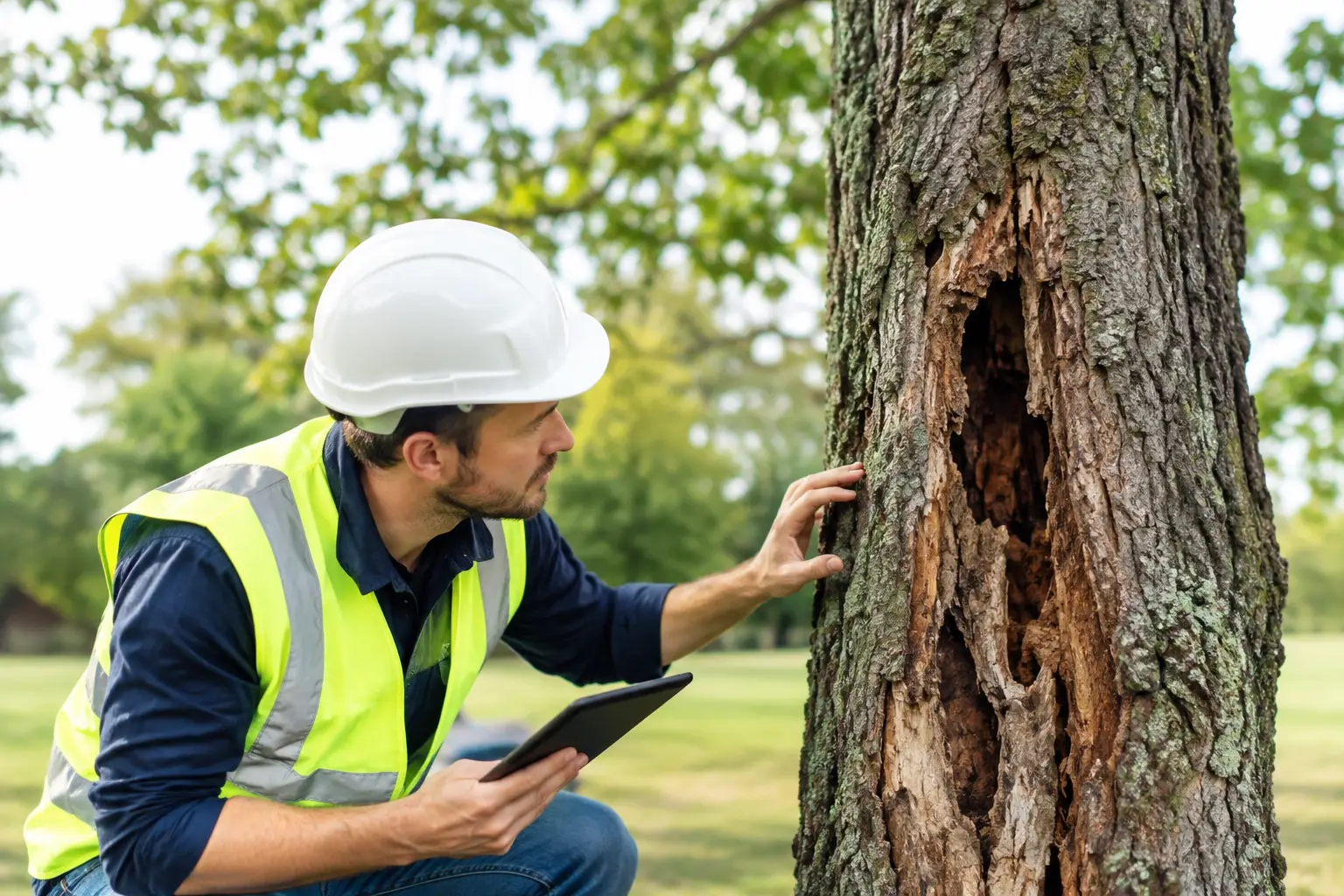
The trunk deserves the same attention. Large vertical cracks, deep splits, hollow areas, and peeling bark can all point to internal decline. A hollow tree is not automatically unsafe, since some older trees can remain stable with a hollow center. The question is how much solid wood remains, where the decay is located, and what the tree could strike if it fails. That is where a professional assessment matters.
Fungal growth around the base is another warning sign worth taking seriously. Mushrooms, shelf-like conks, and soft or crumbling wood may signal decay in roots or the lower trunk. Fungi do not always mean immediate removal, but they do mean the tree needs a closer look.
Watch for Dangerous Branches Over Targets
A sound trunk does not guarantee a safe canopy. Many tree failures involve individual limbs that have weakened from storm damage, decay, poor structure, or excess weight. Look up for hanging branches, broken limbs caught in the canopy, and branches that extend over roofs, play areas, sidewalks, vehicles, or entrances.
Dead branches are often easy to spot in the growing season because they have no leaves while the rest of the tree is full. In winter, look for missing bark, brittle twigs, cracks near branch unions, and limbs that appear gray, bare, or disconnected from the living canopy. A dead limb can remain in place for a long time, then drop without much warning.
Pay close attention to co-dominant stems. These are two or more main trunks that grow from the same area and compete for space. When the connection between them forms a narrow V shape with bark pressed into the union, it may be weak. Included bark prevents a strong attachment from forming and can make splitting more likely as the stems gain size and weight.
Not every low or long limb needs removal. Proper pruning can often reduce weight, improve clearance, and remove deadwood while preserving a valuable tree. Topping, or cutting back large branches indiscriminately, is not the answer. It can stress the tree, encourage weak regrowth, and create more hazards later.
Signs of Decline That Need a Closer Look
Some tree problems develop slowly and are easy to overlook until a storm exposes them. Changes in the canopy can provide an early warning. Thin leaf coverage, early leaf drop, small leaves, dead tips, or bare sections on one side of the tree may indicate stress, disease, root damage, or pest activity.
A few dead twigs are normal in many mature trees. Widespread dieback is different. If major limbs are declining, the crown has noticeably thinned, or more than one season has passed with poor leaf growth, it is time to investigate the cause.
Damage from construction is a common issue on developing or renovated properties. Roots extend well beyond the trunk, and excavation, trenching, grading, soil compaction, or changes in drainage can affect a tree long after the work is complete. A tree may appear fine when a project ends, then decline over the next several years as damaged roots lose their ability to support the canopy.
Middle Tennessee weather adds another layer of risk. Strong thunderstorms, saturated ground, ice, and high winds can reveal hidden weaknesses in oaks, maples, pines, tulip poplars, and other established trees. After a storm, check for new cracks, hanging limbs, lifted roots, split leaders, and branches resting on structures. If utility lines are involved, stay clear and contact the utility provider first.
Location Changes the Level of Risk
A declining tree in an open field may have time for monitoring. The same tree beside a bedroom, parking lot, playground, or busy entrance needs a more urgent decision. Tree risk is not only about the tree’s condition. It also depends on the target below it and how often people are present.
Consider the tree’s full potential fall zone, not just the area directly beneath the trunk. Tall trees can reach roofs, sheds, neighboring property, driveways, and streets. On commercial sites, include pedestrian routes, employee parking, loading areas, signage, and outdoor gathering spaces in the evaluation.
Property owners should also consider access. A tree that is easy to reach before it fails is usually safer and less costly to address than one that falls across a fence, structure, or roadway. Limited access, steep slopes, nearby buildings, and tight backyard spaces often require specialized equipment and a planned removal approach.
When to Call a Tree Professional
A visual inspection from the ground is useful, but it has limits. Internal decay, root loss, structural defects high in the canopy, and changes in load are not always obvious to an untrained eye. Calling for an assessment is the right move when a tree has a new lean, large cracks, visible decay, significant deadwood, storm damage, or branches over an important target.
It is also wise to call when you simply are not sure. An honest assessment may lead to pruning, monitoring, cabling in limited situations, or removal. It depends on the species, condition, location, and the consequences of failure. Removal is sometimes necessary, but it should be based on the actual risk rather than appearance alone.
Do not climb the tree, cut high limbs from a ladder, or attempt to bring down a leaning tree with a truck or rope. These are some of the most dangerous situations in tree work. Even a small mistake can change the direction of a falling limb or cause a tree to react unpredictably.
Keep a Simple Inspection Routine
A brief walk around your property a few times each year can help you catch changes early. Check mature trees after severe weather, during leaf-out in spring, and again when leaves begin to drop. Take photos if you notice a crack, lean, canopy change, or fungal growth so you can compare it over time.
For properties in Smyrna, Nashville, Franklin, Brentwood, and surrounding Middle Tennessee communities, routine attention is especially valuable where mature trees stand close to homes and developed areas. A small concern addressed early may only require targeted pruning. Waiting until a limb is over a roof or a trunk has split can turn a manageable job into urgent storm cleanup.
If a tree is giving you reason to pause, trust that instinct and keep the area clear. Men in Green can provide a straightforward evaluation and a free estimate for the pruning, removal, or cleanup work needed to help protect your property.