A mature tree can look perfectly healthy from the driveway and still have a serious weakness below ground or high in the canopy. Tree failure signs are not always dramatic, especially before a strong thunderstorm, heavy rain, or winter ice exposes the problem. Knowing what to look for can help Middle Tennessee property owners protect people, buildings, vehicles, fences, and neighboring properties.
Tree failure means a tree, trunk, major limb, or root system can no longer support its own weight. Sometimes failure is sudden. More often, there are warning signs that deserve a closer look from an experienced tree professional.
Tree Failure Signs You Should Not Ignore
The most urgent warning signs involve a target. A cracked limb over open lawn may still need attention, but the same limb over a roof, driveway, playground, parking area, or power line presents a much higher risk. The tree does not have to be completely dead to fail. Healthy-looking trees can split at weak branch unions, lean after root damage, or come down when saturated soil gives way.
New or Increasing Lean
Not every leaning tree is unsafe. Some trees naturally grow at an angle and have remained stable for decades. The concern is a lean that is new, getting worse, or accompanied by disturbed soil around the base.
Look for raised roots, a mound of soil on one side of the trunk, fresh cracking in the ground, or a gap between the trunk and surrounding soil. These signs can indicate that the root plate is shifting. After prolonged rain, Middle Tennessee clay soils can become saturated, reducing the support roots provide. A newly leaning tree near a house, road, or common area should be assessed promptly.
Cracks, Splits, and Weak Branch Unions
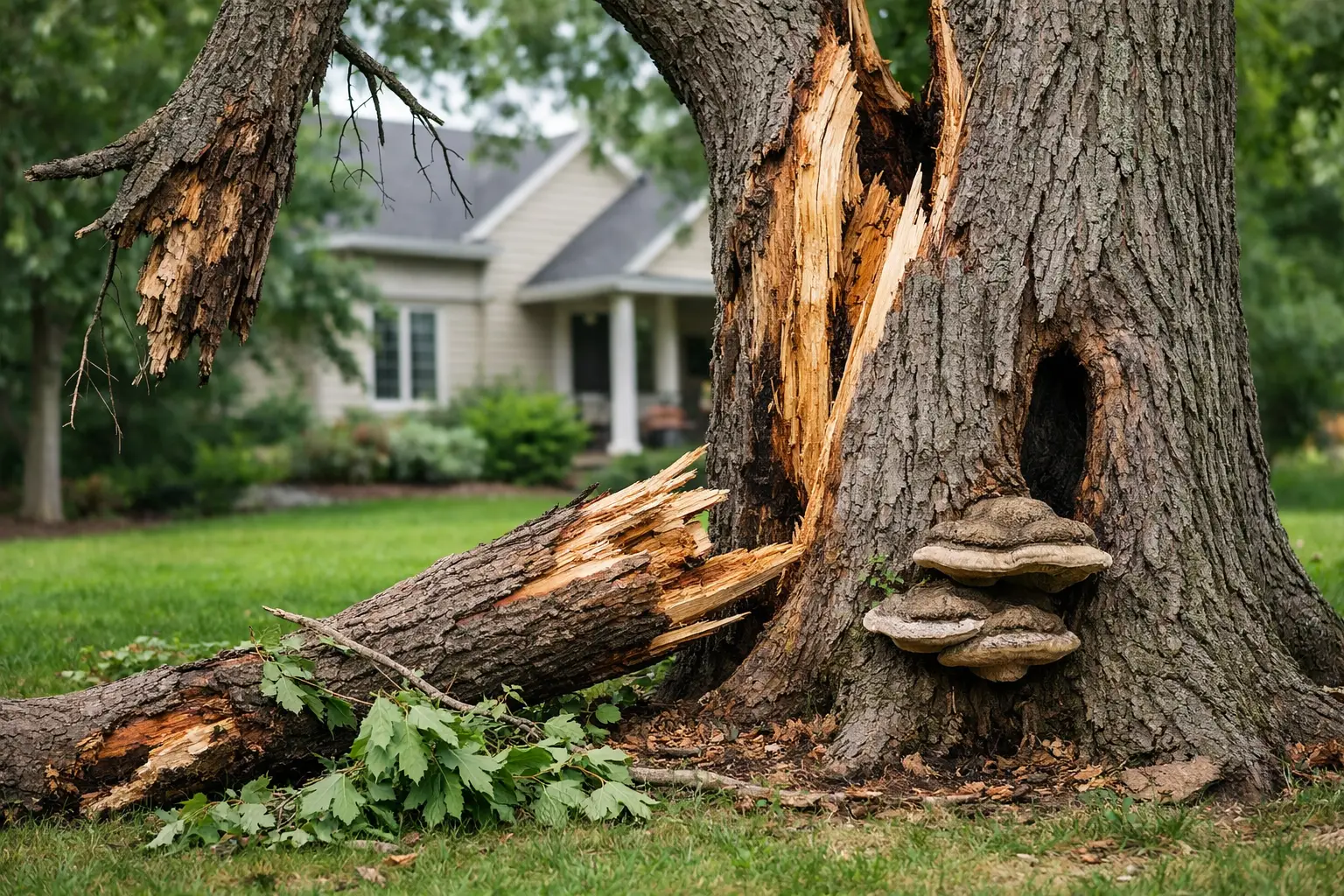
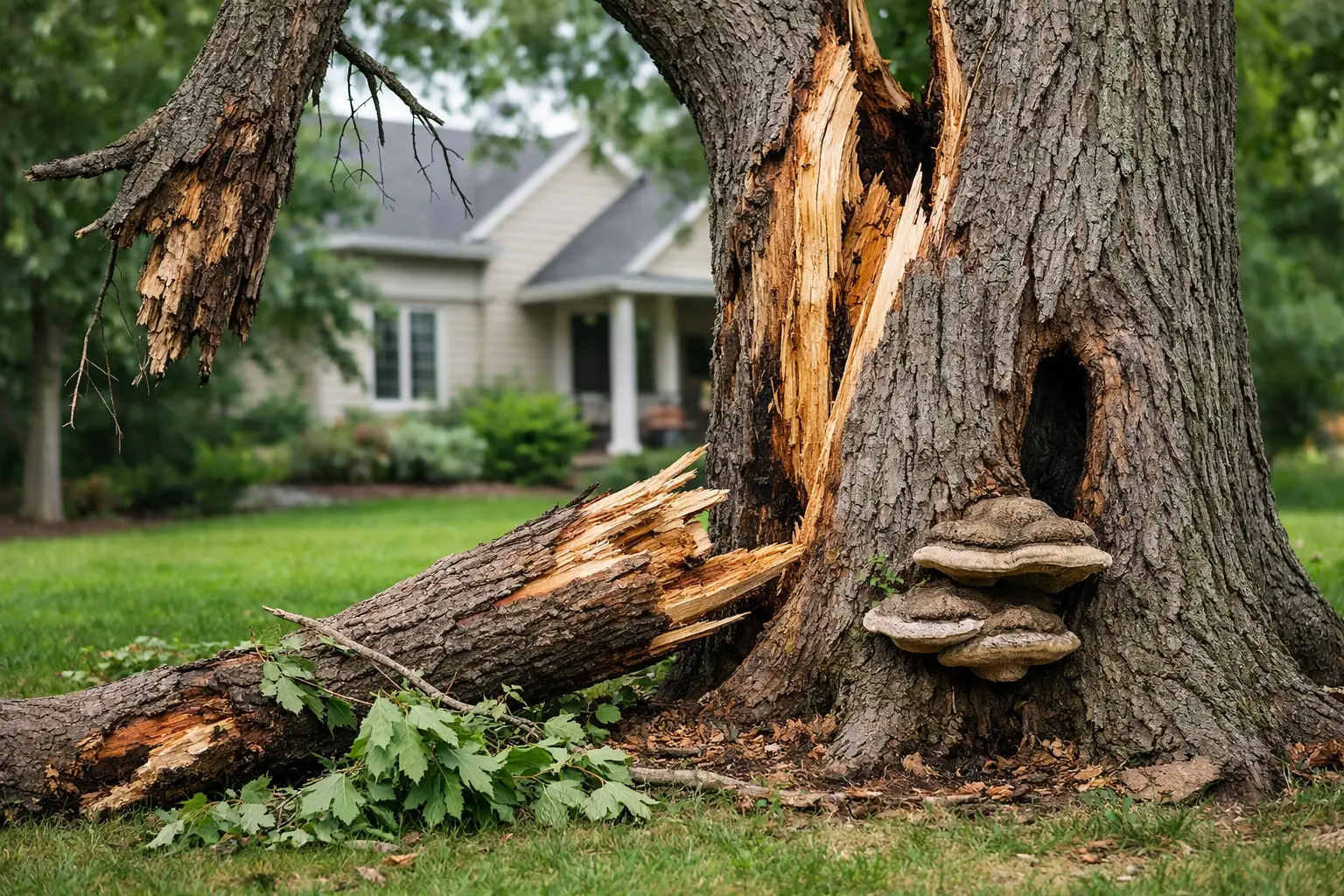
A crack in a trunk or a large limb is never something to dismiss as cosmetic. Vertical cracks, open seams, and splits where two major stems meet can show that the wood is under stress. This is especially common in trees with co-dominant stems – two main trunks growing from the same point in a tight V-shaped union.
Included bark is another concern. Instead of strong wood connecting the stems, bark becomes trapped between them, creating a weak attachment. The tree may look full and balanced from below, but one stem can separate under wind, ice, or the weight of wet leaves.
Do not try to pull apart a cracked limb or cut it while standing underneath it. The safest next step depends on the size, location, and condition of the tree. Pruning may reduce risk in some cases, while removal is the more responsible option in others.
Dead, Hanging, or Broken Limbs
Dead branches are among the most visible tree failure signs. They often have no leaves during the growing season, peeling bark, brittle twigs, or a gray, weathered appearance. A dead limb can remain caught in the canopy for months before wind or gravity brings it down.
Broken limbs that are still hanging are more urgent. They can shift without warning, particularly after storms. Keep people, pets, vehicles, and equipment out of the drop zone. If a hanging limb is near electrical service, do not approach it or attempt a cleanup. Contact the utility provider for active line concerns and arrange professional tree service once the area is safe.
Decay, Cavities, and Fungal Growth
Decay is often hidden inside a trunk, which is why a tree with green leaves may still be structurally compromised. Cavities, large wounds, loose bark, and soft or crumbly wood around the base deserve attention. Mushrooms or shelf-like fungi growing on the trunk, root flare, or nearby soil can also indicate decay in the roots or lower stem.
Fungal growth does not automatically mean a tree will fail tomorrow. Some decay can be managed when the tree has enough sound wood and no high-value targets nearby. The trade-off is risk. A tree in the back of a large wooded lot may be monitored differently than one leaning over a nursery, sidewalk, or apartment parking lot.
Root Damage and Soil Problems
Roots do more than take up water. They anchor the tree. Construction activity, trenching, grade changes, soil compaction, driveway work, and repeated vehicle traffic can damage critical roots without changing the tree’s appearance right away.
Watch for thinning foliage, dieback in the upper canopy, leaf drop outside the normal season, or small branches dying back over time. These symptoms may point to root stress, disease, drought, or several factors working together. If excavation or land clearing has occurred near mature trees, an inspection before the next storm season is a practical precaution.
Soil erosion around roots is another problem. Water moving across a slope can expose roots and wash away the soil that supports them. This can be especially noticeable along drainage areas, creek banks, and lots with recent grading.
A Sudden Change in the Canopy
Trees usually decline gradually, but a sudden change deserves attention. One section of the canopy turning brown while the rest remains green may indicate a damaged limb, vascular issue, or root problem. Sparse leaves, unusually small leaves, and dead upper branches can also signal declining health.
A tree does not need to be removed simply because it has a few dead branches. Proper pruning can improve safety and help preserve a tree with a sound structure. The key is determining whether the issue is limited to individual limbs or reflects a larger failure risk in the trunk or roots.
When Storm Damage Makes Tree Failure More Likely
Storms reveal weaknesses that have been developing quietly. High winds can twist a heavy limb at a weak union. Rain can saturate the ground around shallow roots. Ice adds weight to limbs that are already overextended or decayed.
After severe weather, walk your property from a safe distance and look upward before walking beneath trees. Check for broken tops, fresh cracks, hanging branches, and trees that have shifted toward a structure or driveway. For commercial properties, HOA communities, and multifamily sites, inspect pedestrian routes, parking areas, entrances, and shared green spaces before normal activity resumes.
Avoid the temptation to handle a large storm-damaged tree with a ladder, chainsaw, or pickup truck. Trees under tension can roll, spring, or drop unexpectedly. Professional crews use the right equipment and work methods to control those risks while protecting the surrounding property.
How a Professional Tree Assessment Helps
A proper assessment looks beyond whether a tree is alive. A tree professional considers its structure, visible decay, root condition, lean, canopy weight, recent site changes, and what the tree could strike if it fails. That last point matters. Risk is a combination of the likelihood of failure and the consequences if it happens.
The recommendation may be targeted pruning, removal of a hazardous limb, full tree removal, or continued monitoring. Honest assessments should account for the tree’s condition and its location, not push removal when preservation is appropriate. For trees close to homes or tight commercial spaces, the work plan should also address access, equipment placement, protection of nearby surfaces, and cleanup.
What to Do When You See a Warning Sign
If you notice a major crack, a fresh lean, uprooting roots, or a hanging limb over an occupied area, keep the area clear and schedule an assessment as soon as possible. Take photos from a safe distance if they help document a change, but do not stand beneath the tree for a better angle.
For an immediate emergency involving downed or damaged power lines, stay away, keep others clear, and contact the utility provider or emergency services. Tree work near energized lines requires specialized precautions.
Property owners in Smyrna, Murfreesboro, Nashville, Franklin, and surrounding Middle Tennessee communities deal with fast-moving storms, mature trees, and changing soil conditions. Men in Green provides clear, safety-focused assessments and professional cleanup for hazardous limbs, storm damage, and tree removal needs. A timely inspection can turn a concern you noticed from the ground into a plan that protects the property before the next storm tests it.