
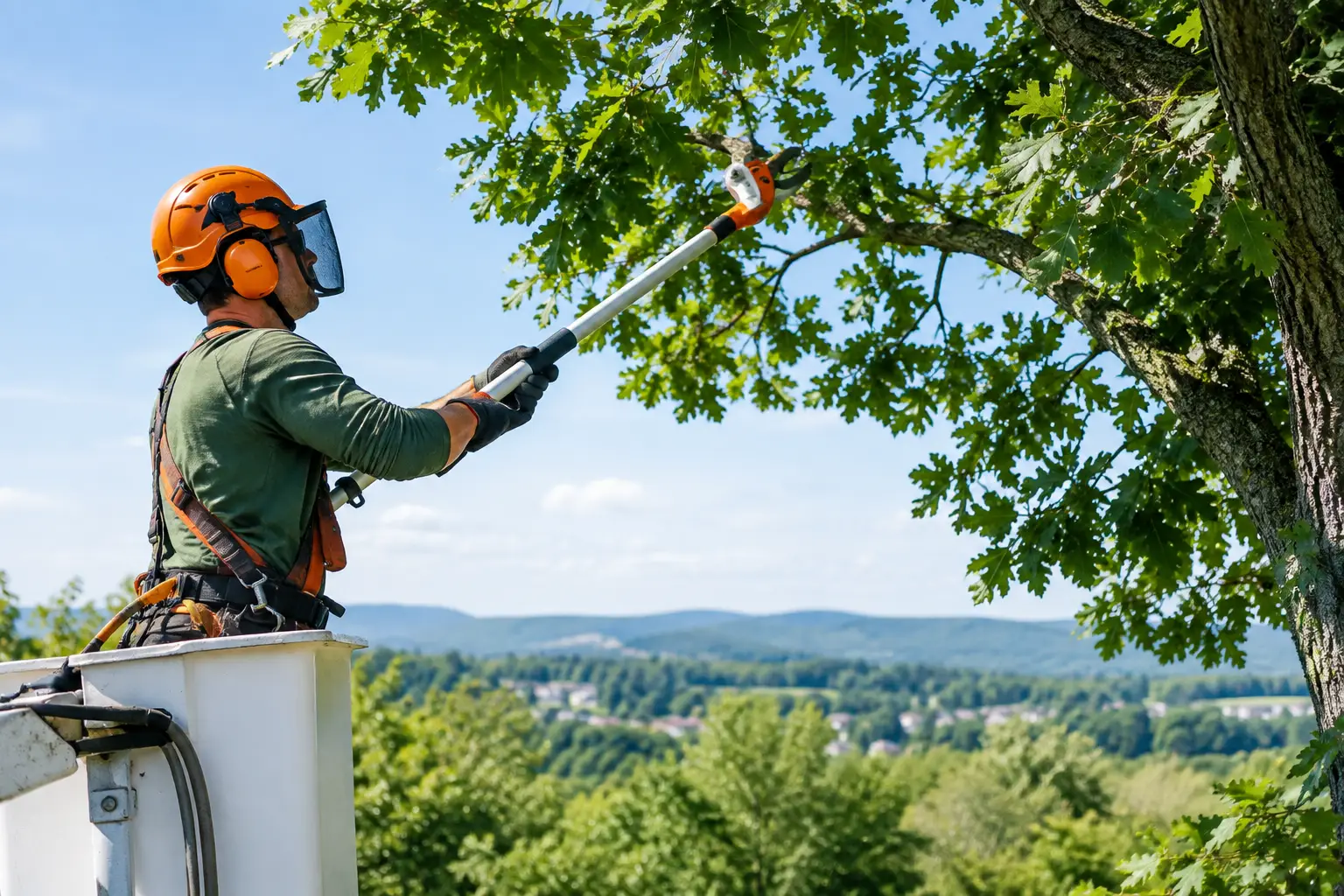
A good tree trimming schedule is not about cutting branches on the same date every year. It is about checking the condition of each tree, managing risk before storms arrive, and pruning at a time that supports healthy growth. For property owners in Middle Tennessee, that matters because heavy rain, summer heat, high winds, ice, and fast-growing vegetation all put pressure on trees throughout the year.
A mature oak in a Smyrna yard, a row of ornamental trees at an HOA entrance, and large shade trees around a commercial parking lot do not need the same care. The right schedule depends on species, age, location, past damage, and how much risk a failing limb creates for people, vehicles, roofs, fences, or utility lines.
Build Your Tree Trimming Schedule Around the Seasons
Most routine structural pruning is best handled during the dormant season, generally from late fall through winter. With leaves off the branches, it is easier to see crossing limbs, weak branch unions, deadwood, and uneven growth. Trees are also under less active growth stress during dormancy, which makes this a practical time for many trimming projects.
Winter work is especially useful for large deciduous shade trees. Removing dead, broken, rubbing, or poorly attached limbs can reduce the chance that a storm turns a manageable issue into damage over a driveway or roof. It is also a good time to raise low limbs over access roads, sidewalks, parking areas, and equipment paths.
That said, winter is not a universal rule. Some flowering trees should be pruned after they bloom if preserving the current season’s flowers is a priority. Evergreens, fruit trees, newly planted trees, and storm-damaged trees can also call for a different approach. The condition of the tree always matters more than following a calendar without question.
Late Winter: The Main Pruning Window
Late winter is often the strongest window for planned trimming in Middle Tennessee. A professional crew can assess branch structure before spring leaf-out and address issues that are hard to spot in summer. This is the time to correct crowded limbs, remove deadwood, and selectively reduce overextended branches.
The goal is not to make a tree look stripped or perfectly round. Proper pruning keeps the tree’s natural shape while improving clearance, weight distribution, and airflow. Cutting too much at once can stress a tree, trigger weak new shoots, and leave it more vulnerable over time.
Spring: Inspect After New Growth Begins
Spring is a good time for inspection, especially after a wet winter or periods of high wind. As trees leaf out, you may notice limbs that did not survive winter, branches hanging lower than expected, or areas where dense growth is blocking visibility around a driveway, entrance, or sign.
Spring trimming should usually be targeted rather than aggressive. Remove clearly dead or damaged material, address hazards, and keep branches away from buildings or high-traffic areas. If a tree is blooming, wait until after the flowers fade before pruning for shape unless there is an immediate safety concern.
Summer: Manage Clearance and Storm Risk
Summer is when many property owners discover that a small branch problem has become a large clearance problem. Fast growth can press against gutters, scrape siding, crowd outdoor lighting, block security cameras, or hang over sidewalks and parking spaces.
Selective summer trimming can solve those problems, but it takes restraint. Removing large amounts of live canopy during heat and drought can place unnecessary stress on a tree. Focus on dead limbs, broken branches, building clearance, and limbs that present a clear risk. Water-stressed or newly planted trees deserve particular care.
For commercial sites, summer is also the right time to review tree clearance around delivery routes, fire lanes, entrances, and pedestrian areas. A branch that is merely inconvenient on a residential lot can become a liability where customers, tenants, and employees pass beneath it every day.
Fall: Prepare Before Severe Weather
Fall is a practical time to walk the property before winter weather arrives. Look for hanging limbs, cracks where major branches connect to the trunk, mushrooms or decay around the base, fresh leaning, exposed roots, and branches extending over structures.
Some trimming can be completed in fall, particularly when hazards are obvious. However, major pruning decisions should be based on the tree species and condition, not simply the season. A qualified assessment can determine whether selective trimming will solve the problem or whether removal is the safer choice.
How Often Should Trees Be Trimmed?
Healthy, established trees often benefit from professional evaluation every three to five years, with pruning performed as needed. Younger trees may need more frequent structural pruning – often every two to three years – because early corrections help develop a stronger framework as they grow.
Trees near homes, roads, parking lots, playgrounds, patios, or power lines need closer attention. In those settings, an annual inspection is sensible even if major trimming is not necessary every year. Regular inspections catch deadwood and developing defects before they become emergency calls.
Certain situations justify immediate action outside any routine schedule. Do not wait for the next planned service if you see a cracked limb, a branch resting on a roof, a tree that has shifted after a storm, or roots lifting near a structure. If a limb is close to a power line, keep people away and contact the utility provider or a qualified tree service. Never attempt to cut utility-adjacent limbs yourself.
What a Good Trimming Plan Should Address
A useful plan starts with more than appearance. It should identify what needs to be removed, why it needs to be removed, and how the work will affect the rest of the tree. For a home, that may mean reducing roof contact, clearing a play area, or removing a dead limb over the driveway. For an HOA or commercial property, it may include maintaining sightlines, pedestrian clearance, signage visibility, and safer access for service vehicles.
Avoid topping trees or cutting back every branch to the same height. Topping can leave large wounds and encourage fast, weak regrowth. It may produce a temporary reduction in height, but it often creates more maintenance and risk later. Proper pruning uses selective cuts to reduce weight, improve structure, or remove defective branches while preserving the tree’s long-term health.
Full cleanup should also be part of the plan. Branches, brush, and sawdust left behind can block drainage areas, create trip hazards, and make a well-done job feel unfinished. Ask before work begins how debris will be handled and whether wood chips or logs can remain on site if that is your preference.
Signs Your Schedule Needs to Change
Your property may need service sooner than expected when weather or tree condition changes the risk. Watch for dead branches, bark splitting, cavities, fungus at the base, branches rubbing together, sudden leaf loss on one section of the canopy, or a tree leaning toward a target such as a home or parking area.
Storm damage deserves a careful look. A branch may stay caught in the canopy after a windstorm and appear stable from the ground, yet fall days or weeks later. Improperly cutting a hung-up limb can make the situation worse, particularly when it is high in the tree or under tension.
Construction and land work can also change tree needs. Soil compaction, grade changes, trenching near roots, and equipment traffic can affect tree health long after a project ends. If you are clearing acreage, adding a driveway, or preparing a building site, identify valuable trees early so crews can plan around root zones and access routes.
When Professional Tree Trimming Makes Sense
Ground-level pruning of small, reachable limbs may be manageable for a homeowner with the right tools. Work above ground, near structures, over a roadway, or around utility lines is different. It requires experience, proper equipment, and a clear plan for where every cut branch will land.
Men in Green helps Middle Tennessee property owners build practical maintenance plans for mature trees, routine pruning, hazardous limbs, storm cleanup, and larger property needs. An honest assessment should distinguish between trimming that improves a tree and removal that is necessary for safety.
The best time to address a questionable limb is while it is still a scheduled maintenance job, not after it comes down in a storm. A seasonal walk around your property can give you the information needed to make that call before weather makes it urgent.