
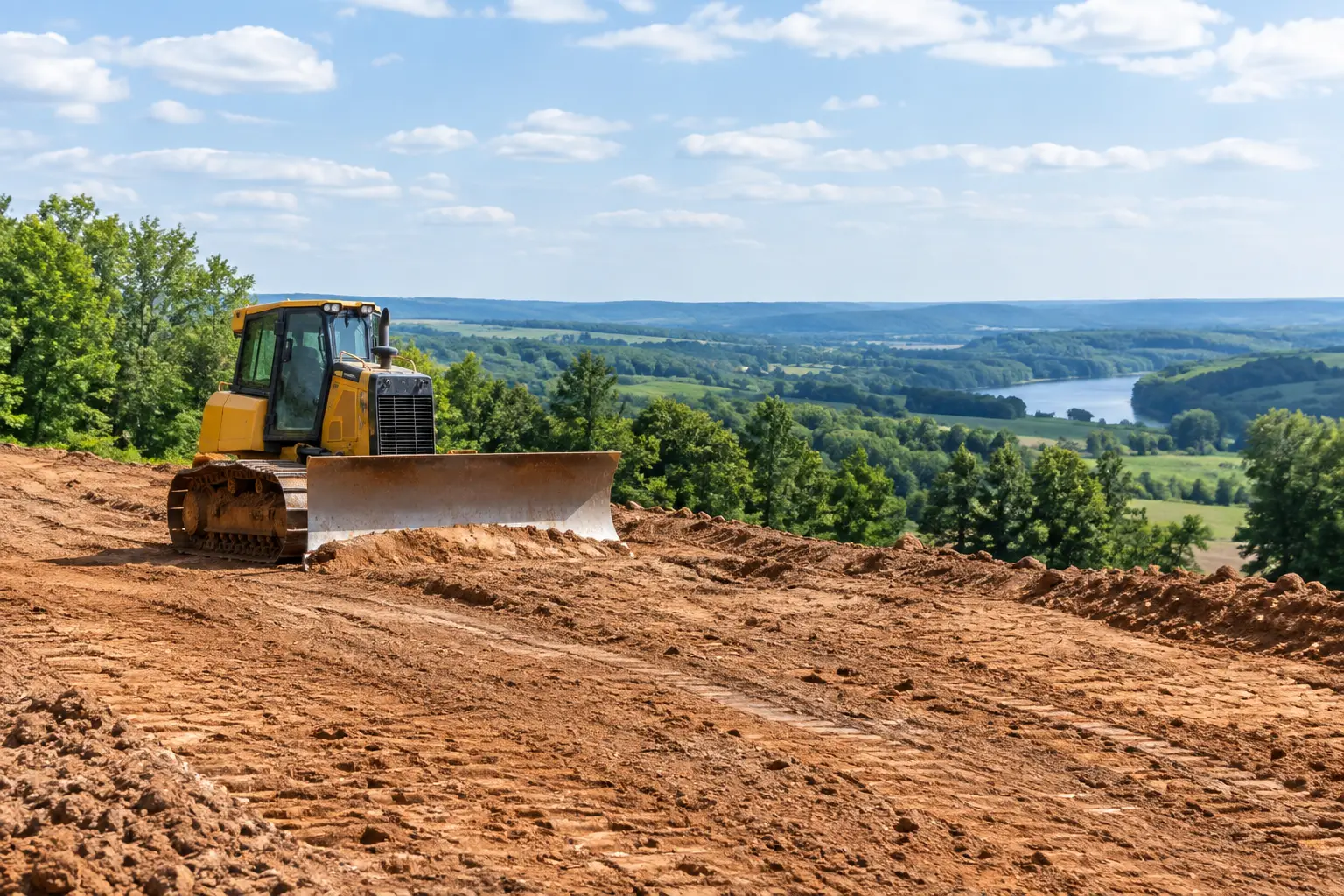
A building pad, new driveway, fence line, pasture, or outdoor living area can look straightforward on paper. On the ground, it may involve mature trees, buried utilities, uneven grades, drainage paths, old stumps, and limited equipment access. This site preparation guide helps Middle Tennessee property owners plan the work in the right order so clearing and construction can begin safely.
Good site preparation is not simply about making land look clean. It is about removing the obstacles that could delay the next phase of work, protecting the parts of the property worth keeping, and leaving the site stable enough for the project ahead.
Start With the Purpose of the Site
Before marking trees for removal or bringing in equipment, define what the finished area needs to do. A site prepared for a detached garage has different requirements than acreage being reclaimed for mowing, a commercial expansion, or a new home build.
Consider the footprint of the project, but do not stop there. Think about vehicle access, material staging, drainage, utility routes, finished grade, and the room contractors need to work. A narrow cleared strip may be enough for a fence line, while a construction project often needs a wider work zone for equipment and deliveries.
It also helps to identify what stays. Healthy shade trees, privacy screening, specimen trees, established drainage swales, and existing structures should be noted before work begins. Removing a tree is permanent. A careful plan separates trees that are in the way from trees that add long-term value to the property.
Walk the Property Before Scheduling Work
A site walk reveals details that maps and photos can miss. Look for dead or leaning trees, hanging limbs, exposed roots, rock, wet ground, old wire fencing, discarded materials, and signs of erosion. On larger lots, note where equipment can enter, turn around, and load debris without damaging lawns, septic areas, driveways, or neighboring property.
In Middle Tennessee, slopes and water movement deserve close attention. Heavy rain can turn a manageable low spot into a soft, rutted access route. Clearing vegetation without a drainage plan can also expose soil to runoff. If water already crosses the proposed work area, address that concern before final grading or construction begins.
Property lines matter as well. Confirm boundaries when work will happen near a fence, adjoining lot, utility easement, or shared drive. A professional crew can work precisely, but no one should have to guess where your property ends.
Identify hazards early
Hazardous trees should be addressed before crews, contractors, or family members begin spending more time around the site. Dead trees, cracked trunks, trees with large cavities, and limbs hanging over structures or travel paths may require controlled removal rather than standard clearing.
This is especially true after storms. A tree can appear stable while roots have shifted below ground or a major limb has partially failed in the canopy. Rushing beneath damaged trees to start cleanup creates unnecessary risk. Let trained professionals assess the hazard and determine the safest removal method.
Check Utilities, Permits, and Access
Call 811 before any digging, grading, stump grinding, or post installation. Utility markings help protect buried electric, gas, water, sewer, communications, and cable lines. Do not assume lines are absent because an area is wooded or has not been developed recently.
Permits and local requirements depend on the scope and location of the work. A small residential cleanup may not require the same approvals as a commercial development, driveway connection, drainage change, or major grading project. Homeowners in an HOA should also review community rules for tree removal, working hours, exterior changes, and contractor access.
Access planning is one of the most overlooked parts of site preparation. Large equipment is often the safest and most efficient way to remove trees, grind stumps, clear brush, or move debris, but it needs a route that can support its weight. Discuss gate widths, overhead limbs, tight corners, septic systems, irrigation, parking areas, and soft ground before the crew arrives.
Clear in the Right Order
The order of work affects both cost and results. In most cases, hazardous trees and large removals come first. Once the area is safe, brush, vines, volunteer trees, and undergrowth can be cleared. Stumps and surface roots are then addressed where they interfere with the intended use of the land.
For a construction site, leaving stumps behind can create problems later. They may interfere with grading, utility trenches, foundations, driveways, or landscaping. Grinding stumps below grade is useful in many situations, while full root removal may be the better choice where future excavation or structural work is planned. The right approach depends on the project, the species and size of the tree, and how the site will be used.
Bush hogging is often a practical first step for overgrown fields, large residential lots, and acreage that needs to become manageable again. It can reveal hidden terrain and help property owners see which trees and brush areas truly need removal. However, bush hogging is not a substitute for land clearing when thick brush, saplings, stumps, or construction obstacles remain.
Protect the areas you want to keep
Clearing should be deliberate, not indiscriminate. Equipment traffic can compact soil around valuable trees, damage roots, and scrape bark from trunks. Mark trees and landscape features to protect, then establish travel routes and debris staging areas away from those zones.
If mature trees will remain near a build area, give their root zones room. Roots often extend well beyond the edge of the canopy. Cutting, filling, or repeatedly driving equipment over that ground can weaken a tree months or years after the work is complete.
Plan for Debris and Cleanup
A cleared site can still be a problem site if debris is left behind. Tree trunks, brush piles, wood chips, root balls, and scattered limbs may block grading, attract pests, create tripping hazards, or complicate the next contractor’s work.
Ask early how debris will be handled. Some property owners want usable firewood left in a designated place. Others need all material hauled away so a builder, landscaper, or paving crew can begin immediately. Wood chips can be useful around natural areas, but they are not always appropriate where finished grading, seed, sod, or concrete work is next.
Professional cleanup should include more than removing visible logs. The work area should be checked for smaller branches, loose debris, and equipment-related impacts. On a residential property, that means respecting lawns, driveways, and nearby landscaping. On commercial and multifamily properties, it also means keeping travel lanes and common areas safe for residents, customers, and employees.
Do Not Treat Drainage as an Afterthought
Removing trees and brush changes how rain reaches the soil. Once the canopy and vegetation are gone, water may move faster across exposed ground. A site that appears dry during a summer walkthrough can behave very differently during a hard Middle Tennessee rain.
Before finalizing a plan, consider where water currently enters, crosses, and exits the property. Maintain natural drainage paths where possible, and coordinate clearing with the grading plan. If the project requires changes to swales, culverts, retaining areas, or drainage structures, involve the appropriate contractor or engineer before making permanent changes.
Timing matters. Clearing during a dry period may reduce rutting and soil disturbance, but storm damage and safety hazards cannot always wait. The practical answer is to match the work method to the site conditions, using the right equipment and access plan rather than forcing a one-size-fits-all approach.
Get a Clear Scope Before Work Begins
A useful estimate should describe the work in plain terms: which trees or areas will be cleared, whether stumps are included, how debris will be handled, what access is needed, and what cleanup is expected. If a tree is close to a house, power line, fence, or neighboring structure, ask how the crew plans to manage that risk.
For larger projects, it is wise to coordinate the tree crew, grading contractor, builder, and utility providers. A few conversations before work begins can prevent duplicated effort, avoid re-clearing an area, and keep one contractor from blocking another’s access.
Men in Green has spent more than 30 years helping property owners across Middle Tennessee prepare land safely, from targeted tree removal and stump work to brush clearing and storm cleanup. The best first step is an honest site assessment that matches the work to your property, your timeline, and what you plan to build or enjoy there next.